
Farmed Landscape
Priority species are not confined to formally designated or semi-natural habitats. Across the farmed landscape – on field margins, green lanes, road verges, river banks and in conifer plantations – significant wildlife populations persist in habitats that carry no formal designation but play an essential role in supporting the county’s biodiversity. Suffolk’s farmland takes several distinct forms, each shaped by underlying geology, land-use history, and climate, and each supporting a characteristic assemblage of species. Understanding where in the landscape these species occur, and what habitats they depend on, is central to both recording wildlife and making the case for their protection.
Farmland landscapes
Suffolk’s farmland takes three distinct forms, each shaped by geology, soils and agricultural history. The species found on each reflect these differences.
Clayland farmland: The largest farmland landscape in Suffolk, covering the plateau area of high Suffolk on chalky boulder clay, extending from the Waveney valley in the north to the Stour in the south. The clay soils support a mosaic of ancient small irregular fields with pollarded hedgerow oaks, larger modern arable fields, common grazings and greens, deep ditch systems, small copses and remnant parkland. Pastoral farming persists in river valleys. This is the primary Suffolk stronghold for Corn Bunting, which breeds in cereal fields with rough grass margins and bushy hedgerows. Further information: Natural England National Character Area 83: South Norfolk and High Suffolk Claylands.
Key species: Corn Bunting, Tree Sparrow (north Suffolk), Linnet, Skylark, Lapwing, Turtle Dove, Grey Partridge, Yellowhammer, Shepherd’s Needle
Coastal sandy farmland (Sandlings): The Sandlings landscape occupies the coastal belt from Lowestoft south to Ipswich and extending inland along the Deben and Orwell valleys. Flat or gently rolling, with very low rainfall, freely draining infertile sands and gravels, and a more oceanic climate than the Brecks. Much of the original heathland has been lost to afforestation and arable conversion, and the surviving farmland is an important buffer for the remaining heath. Adder and other reptiles persist at the heath-arable interface, and the open, low-nutrient character of some Sandlings farmland supports rare plants and specialist invertebrates.
Key species: Stone Curlew, Woodlark, Nightjar, Linnet, Skylark, Lapwing, Turtle Dove, Grey Partridge, Yellowhammer, Adder, Silver-studded Blue, Annual Knawel, Fine-leaved Sandwort
Breckland farmland: The Breckland lies in north-west Suffolk, straddling the Norfolk border, on freely draining infertile sands and gravels overlying chalk. The distinctive landscape ranges from flint-strewn arable fields lined by twisted pines to sandy heath and open grassland. The term ‘breck’ itself refers to fields that historically went in and out of cultivation, creating the early successional, open-ground conditions on which many Breckland specialists depend. This is the most Continental of Suffolk’s climates – warm, dry summers and cold winters – producing a distinct flora and fauna. Further information: Natural England National Character Area 85: The Brecks.
Key species: Tower Mustard, Red-tipped Cudweed, Annual Knawel, Fine-leaved Sandwort, Tree Sparrow, Linnet, Skylark, Lapwing, Turtle Dove, Grey Partridge, Yellowhammer
Further information
- Farm Wildlife – Farmwildlife.info
- MAGIC – Interactive mapping including designations
- Natural England – National Character Area 83: South Norfolk and High Suffolk Claylands
- Natural England – National Character Area 85: The Brecks
- Suffolk FWAG – Farm Wildlife Advisory Group Suffolk
- Suffolk Wildlife Trust – Habitats Explorer: Farmland, Farm Wildlife Advice
Suffolk’s Farmed Landscape and Wider Countryside Habitats
Key
A conservation priority in Suffolk’s Historic Biodiversity Action Plan.
A key habitat for recovery under Suffolk’s Local Nature Recovery Strategy.




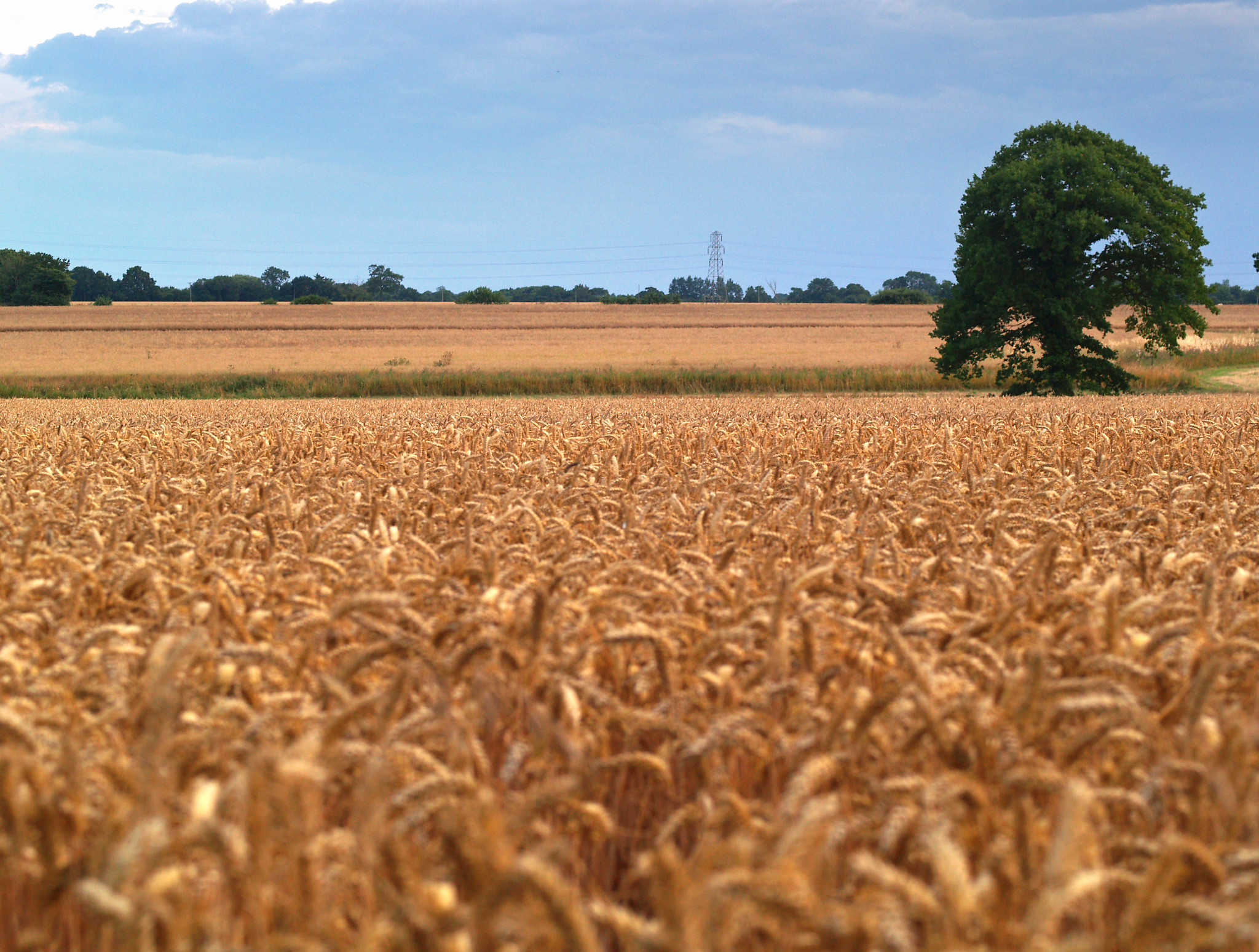
Image: Wheat fields near Cratfield © Manolo Blanco