
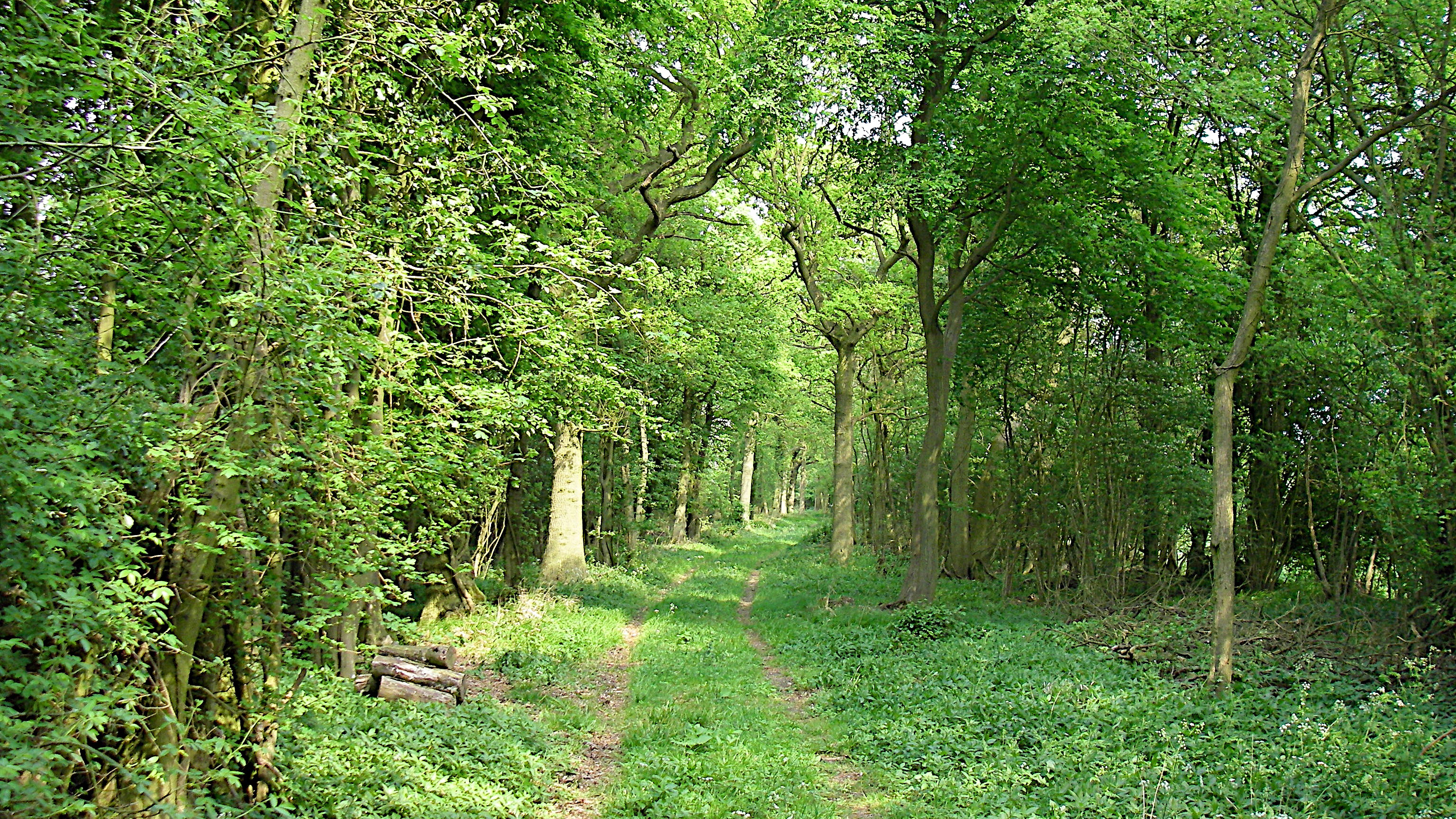
Mixed Deciduous Woodland
Suffolk’s mixed deciduous woodlands are among the county’s most ecologically significant habitats. Many are ancient – continuously wooded since at least 1600 and in some cases since the medieval period or earlier – and this long continuity of woodland cover is what gives them their exceptional character. Ancient woodland cannot be recreated: the specialist plant communities, fungi, invertebrates and lichens that depend on undisturbed soil conditions and centuries of accumulated deadwood take far longer to develop than any practical restoration timescale allows. Suffolk has a rich legacy of coppice-with-standards woodland on the boulder clay plateaux and river valleys that shaped the county’s medieval economy, and the wildlife communities these woods support reflect both their age and the management traditions that formed them.
Defining features
- All semi-natural mixed deciduous woodland in Suffolk, except wet woodland and wood pasture, grows on the full range of soil conditions from acid sands to base-rich clays. Includes ancient coppice, coppice-with-standards, wood pasture remnants on acid soils, and secondary woodland of conservation significance.
- Many Suffolk woods are ancient, small – often less than five hectares – and show evidence of past coppicing, particularly on moderately acid to base-rich soils. On very acid sands, former wood-pastures of oak and birch represent the typical form.
- The ground flora is often the most reliable indicator of a wood’s antiquity and ecological quality: species-rich communities of ancient woodland indicators – including Bluebell, Wood Anemone, Early Purple Orchid and Herb-Paris – develop only in conditions of long continuity.
- Structural diversity – mature timber trees, a working or former coppice layer, dense shrubby understorey, open rides and glades, and an abundance of standing and fallen deadwood – is the defining condition of the most ecologically valuable examples.
Importance for wildlife
Mixed deciduous woodlands support a greater diversity of species than almost any other terrestrial habitat in Suffolk. The combination of a multi-layered structure – from ground flora through shrub layer and understorey to mature canopy – with the gradients of light, moisture and temperature created by rides, glades and woodland edge provides conditions for species with very different ecological requirements within a relatively small area. Ancient woodland plants such as Bluebell, Wood Anemone, Early Purple Orchid and the rare Herb-Paris are strong indicators of long-established woodland, and their presence signals soil conditions – undisturbed structure, accumulated organic matter and established mycorrhizal networks – that cannot be replicated on former arable ground within any useful timescale. Approximately 420 fungal species have been recorded from a single Suffolk wood, reflecting the depth of ecological complexity that ancient woodland conditions produce.
Deadwood is a keystone resource. Standing dead trees, fallen trunks, rot holes, and decaying heartwood support a community of saproxylic invertebrates – including Stag Beetle, whose larvae depend on rotting timber for several years of development – as well as fungi, mosses, specialist lichens and the cavity-nesting birds and bats that exploit hollow trunks and loose bark. Bats are well represented in woodland: Brown Long-eared Bat, Natterer’s Bat and Barbastelle all forage in the understorey and along woodland edges, and several species roost in old trees. The Purple Emperor, one of Britain’s most charismatic butterflies, has a Suffolk stronghold in the woods of the central and southern parts of the county.
Important associated species
Species marked * are Suffolk Priority species. Species marked ** are Priority – Research Only: common and widespread, but rapidly declining.
- Beetles
Stag Beetle (woodland edges), Poplar Leaf-rolling Weevil, Alder Flea Weevil
- Birds
Dunnock, Tree Sparrow, Starling, Song Thrush, Cuckoo, Grasshopper Warbler, Hawfinch, Bullfinch, Lesser Redpoll, Lesser Spotted Woodpecker, Marsh Tit, Willow Tit, Tree Pipit, Wood Warbler, Spotted Flycatcher, Yellowhammer, Nightjar, Woodlark, Turtle Dove*
- Butterflies
White Admiral, Purple Emperor
- Ferns and Flowering Plants
- Fungi and Slime Moulds
- Lichens
Lecania chlorotiza
- Mammals
Barbastelle, Brandt’s Bat, Brown Long-eared Bat, Common Pipistrelle, Soprano Pipistrelle, Daubenton’s Bat, Nathusius’ Pipistrelle, Natterer’s Bat, Noctule, Serotine, Whiskered Bat, Hazel Dormouse
- Moths
Olive Crescent, False Mocha (oak trees), White-spotted Pinion, Grey Dagger**, Knot Grass**, Flounced Chestnut**, Brown-spot Pinion**, Mouse Moth**, Large Nutmeg**, Dusky Brocade**, Sprawler**, Centre-barred Sallow**, Dark Brocade**, Mottled Rustic**, Streak**, Latticed Heath**, Oak Lutestring** (oak trees), Figure of Eight**, Small Phoenix**, September Thorn**, Dusky Thorn**, August Thorn**, Spinach**, Garden Dart**, White-line Dart**, Double Dart**, Small Emerald**, Ghost Moth** (woodland rides), Rustic**, Rosy Rustic**, Brindled Beauty**, V-moth**, Lackey**, Dot Moth**, Pretty Chalk Carpet** (chalky soils), Rosy Minor**, Shoulder-striped Wainscot**, Dark Spinach**, Shaded Broad-bar**, White Ermine**, Buff Ermine**, Hedge Rustic**, Feathered Gothic**, Blood-vein**, Pale Eggar**, Cinnabar** (woodland rides), Oak Hook-tip** (oak trees), Sallow**, Dark-barred Twin-Spot Carpet**
- Spiders
Serrated Tongue Spider
Factors affecting this habitat in Suffolk
- Excessive deer browsing, which alters woodland structure, impoverishes ground flora, suppresses coppice growth and, over time, prevents the natural regeneration of tree and shrub species that sustains the woodland’s long-term character.
- Fragmentation and isolation of woodland from other semi-natural habitats, which reduces the capacity for species to move between sites and increases extinction risk for the least mobile species.
- Poor or absent management, leading to structural uniformity as coppice falls out of rotation, rides close over and the diversity of light conditions across the woodland declines.
- Tree diseases, including Ash Dieback (Hymenoscyphus fraxineus), Acute Oak Decline and Dutch Elm Disease, threaten the structural integrity of woodlands that are heavily dependent on these species.
- Removal of deadwood – standing dead trees, fallen trunks and hollow limbs – which destroys the habitat of Stag Beetle larvae and a wide range of other saproxylic invertebrates, fungi and specialist lichens.
- Agricultural intensification up to woodland boundaries, including cultivation that damages root systems and compacts soil, the removal of buffer strips and the application of fertilisers and pesticides that affect ground flora and invertebrate communities at the woodland edge.
- Clearance for development and infrastructure, which causes direct and permanent loss of ancient woodland that cannot be replaced.
Habitat management advice
- Manage woodlands in accordance with the UK Forestry Standard, which provides guidance appropriate to semi-natural woodland types and ancient woodland.
- Maintain and, where possible, restore structural diversity: mature timber trees of varying age and species, a coppice or shrub understorey at different stages of the rotation, and transitional zones between dense canopy and open ground. Structural diversity is what sustains species diversity; uniformity in age or canopy density tends to reduce it.
- Maintain the natural character of the woodland wherever possible. Avoid sudden or drastic interventions that rapidly change the light environment or soil conditions; even beneficial management practices work best when phased and rotational.
- Maintain and enhance woodland edge habitat, ensuring a gradual transition from closed canopy to shrubby understorey to open grassland or rides. A well-structured edge supports a significantly richer invertebrate and bird community than a hard boundary between trees and open ground.
- Manage rides and glades to provide sheltered, sunny areas with a diverse sward of flowering plants, bare ground and both short and tall vegetation. Open areas within woodland are disproportionately important for invertebrates, reptiles, butterflies and ground-nesting birds, and their management should be actively planned rather than left to chance.
- Retain all forms of deadwood: standing dead trees, fallen trunks, rot holes, loose bark and hollow limbs in both shaded and open situations. Deadwood in sunny positions is used by different invertebrate communities from deadwood in shade; both are important. Deadwood also supports the fungi that provide food for invertebrates and birds.
- Leave wet features – streams, ponds and flushes – undisturbed. These support specialist communities of their own and significantly increase the overall ecological value of the woodland.
- Maintain undisturbed soil structure wherever possible. Ancient woodland soils contain mycorrhizal networks and seed banks built up over centuries; compaction, cultivation or the import of topsoil destroys these in ways that take generations to recover.
- Allow natural regeneration wherever possible, supplementing with locally sourced planting only where regeneration is insufficient to maintain canopy continuity or where deer pressure prevents establishment without protection.
- Manage deer to levels that permit natural regeneration of trees and shrubs and allow the ground flora to recover. Where deer pressure is identified as a limiting factor, consider targeted management or temporary fencing of regeneration areas.
Ancient woodlands
Ancient woodland indicator plants are species whose presence in a wood is strongly associated with long continuity of woodland cover on the same site. They cannot easily colonise new woodland because they depend on stable soil conditions, established mycorrhizal networks and the particular microclimate that only long-standing woodland produces. Suffolk’s ancient woodland indicators include Bluebell, Wood Anemone, Early Purple Orchid, Herb-Paris, Crested Cow-Wheat, Yellow Archangel and Wood Millet. The presence of several indicator species together is a strong signal of ancient woodland status, even where documentary records are absent. Suffolk Lungwort – an endemic lichen found only in Suffolk and nowhere else in the world – is the county’s most remarkable ancient woodland specialist and is recorded from just a handful of sites, all on old-growth ash and wych elm in undisturbed ancient woodland.
Suffolk’s ancient woodlands are documented in detail through the Ancient Woodland Inventory, which SBIS updated between 2021 and 2025 to produce the most comprehensive record of the county’s ancient woodland, ancient wood pasture and parkland to date. The inventory maps individual sites across Suffolk and provides the evidence base underpinning planning decisions, habitat management, and conservation targeting. Whether you are researching a specific site, advising on development, or simply exploring Suffolk’s woodland heritage, the Ancient Woodland section of this website provides maps, indicator species guides, habitat feature records, and plant community data drawn directly from the survey work.
Vision for Suffolk
The following priorities reflect the strategic goals for deciduous woodland in Suffolk, drawing on both the Biodiversity Action Plan framework and the Local Nature Recovery Strategy.
- Improve knowledge of the extent and condition of lowland mixed deciduous woodland across the county, with particular attention to unrecorded woods under two hectares.
- Maintain the existing extent of lowland mixed deciduous woodland to ensure no net loss, and give the strongest protection to ancient woodland.
- Re-create lowland mixed deciduous woodland where opportunities arise, prioritising locations adjacent to existing ancient woodland where natural colonisation of indicator species may eventually be possible.
- Encourage the restoration and improvement of degraded woodland, particularly through the reinstatement of coppice management, deer control and deadwood retention on sites that have fallen out of active management.
Further information
- Forest Research – Managing semi-natural woodlands
- JNCC – Habitat description: Lowland Mixed Deciduous Woodland (PDF)
- MAGIC – Interactive mapping including designations
- Suffolk Wildlife Trust – Habitats Explorer: Woodland
- Woodland Trust – Ancient woodland
- Peterken, G.F. (1981) Woodland Conservation and Management. London: Chapman and Hall
- Rackham, O. (1980) Ancient Woodland. London: Arnold
- Making Space for Nature – Lawton Review, Defra, 2010 (PDF, historical reference)
- The Natural Choice: Securing the Value of Nature – Natural Environment White Paper, 2011 (PDF, historical reference)
Suffolk’s Woodland Habitats
Key
A conservation priority in Suffolk’s Historic Biodiversity Action Plan.
A key habitat for recovery under Suffolk’s Local Nature Recovery Strategy.


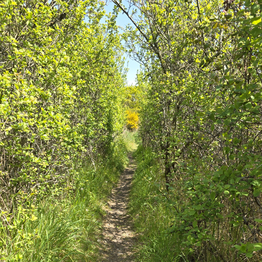

Image: A wide ride through woodland provides important edge areas © Gary Battell
 Archived Habitat Factsheet (PDF, 2020) Superseded – provided for reference only.
 Archived Suffolk BAP action plan (PDF, 2003) Superseded – provided for reference only.