
Rivers and Streams
Rivers and streams are among Suffolk’s most ecologically dynamic habitats. From the deeply incised stream valleys of the boulder clay plateau – known locally as ‘gulls’ – to the slow-moving, chalk-fed rivers of the south and the tidal reaches of the coast, their character is shaped by geology, gradient, flow rate and catchment land use to a degree matched by few other habitat types. Suffolk’s rivers support some of the county’s most demanding species: Otter, Water Vole, White-clawed Crayfish and Desmoulin’s Whorl Snail all depend on well-structured river systems in good condition, and the ecological health of each river is inseparable from the riparian corridor and catchment that surrounds it.
Defining features
- All natural and near-natural running waters, from fast-flowing streams to slow, meandering lowland rivers and tidal reaches.
- Ecological character is determined by an interaction of factors including geology, topography, substrate, gradient, flow rate, altitude, channel profile, climate and catchment land use.
- River systems typically change markedly in character along their course from source to mouth, creating a succession of distinct habitats and associated communities.
- Associated riparian habitats – including water meadows, fens, unimproved grassland, carr and bankside trees – form an integral part of the ecological system and are essential to many river-dependent species.
Importance for wildlife
Rivers and streams are among the most structurally diverse of all habitats: from deeply incised boulder clay gulls to broad, slow-moving lowland channels and tidal estuaries, the variation in flow, substrate, depth and bank profile creates an enormous range of micro-habitats within and alongside the water. They also function as wildlife corridors of exceptional importance, connecting habitats across the landscape along their entire length and enabling species to move in ways that would be impossible across the surrounding farmland. The aquatic communities supported by running water are often highly specialised, with many invertebrate species having precise requirements for temperature, oxygen levels, flow rate and substrate.
Suffolk’s rivers support a range of nationally significant species. The Otter has returned to all of the county’s major river systems following a severe decline in the twentieth century, while Water Vole – although still under pressure – persists along a number of river corridors. The White-clawed Crayfish, Britain’s only native crayfish, is highly vulnerable to disease spread by the invasive Signal Crayfish and now survives in only a handful of Suffolk locations. The rare Desmoulin’s Whorl Snail, a species of international conservation significance, depends on specific conditions of waterside vegetation and moisture along river margins. Bats forage extensively over open water, with Daubenton’s Bat in particular closely associated with rivers, skimming low over the surface to take emerging insects.
Important associated species
Species marked * are Suffolk Priority species. Species marked ** are Priority – Research Only: common and widespread, but rapidly declining.
- Aquatic Invertebrates
- Beetles
- Dragonflies and Damselflies
- Ferns and Flowering Plants
Tubular Water-Dropwort, Native Black Poplar *, River Water-dropwort
- Fish (freshwater)
- Mammals
Daubenton’s Bat *, Soprano Pipistrelle, Whiskered Bat *, Common Pipistrelle *, Nathusius’ Pipistrelle *, Otter, Water Vole, Water Shrew *
- Molluscs
Depressed River Mussel, Desmoulin’s Whorl Snail, Swollen Spire Snail
- Moths
Crescent Moth (riverside margins) **
- Reptiles and Amphibians
Factors affecting this habitat in Suffolk
- Excessive water abstraction from rivers and groundwater, leading to reduced flows, the drying out of upper river sections and riparian zones, silt accumulation and changes in aquatic vegetation structure.
- Physical modification of river channels, including dredging, lowering of river beds and confinement to artificial channels for flood defence, drainage or navigation purposes, which reduces habitat diversity and disconnects rivers from their floodplains.
- Pollution and nutrient enrichment from agricultural and urban run-off cause de-oxygenation and excessive growth of blanket-weed and algal blooms.
- Intensive fisheries management, including regular cutting of aquatic vegetation, fencing and mowing of bankside strips, infilling and stabilisation of banks, and the removal of fish species perceived as unwanted.
- Invasion by non-native Signal Crayfish (Pacifastacus leniusculus), which spreads crayfish plague, lethal to the native White-clawed Crayfish and causes significant bank erosion through burrowing.
Habitat management advice
- Maintain a mosaic of associated habitats alongside rivers – including fens, water meadows, unimproved grassland and carr – to maximise species diversity across the riparian corridor.
- Take into account the needs of important species when planning management. Some species associated with winterbournes and seasonal streams depend on a natural cycle of wet and dry phases across the year.
- Retain side channels and avoid over-abstraction. Side channels provide refugia for invertebrates and fish during drought and spate, and their loss significantly reduces habitat complexity. Reduced flows threaten mayfly and other invertebrate populations as well as the species that depend on them.
- Avoid discharging nutrients and diffuse pollutants into watercourses. Nutrient enrichment promotes algal blooms, causes eutrophication and can eliminate rare and sensitive species from otherwise suitable sites.
- Favour natural, gently sloping margins with soft sediment over steep banks and hard profiles. Soft margins support a far greater range of aquatic and semi-aquatic species and are essential for species such as Otter and Water Vole.
- Allow cattle access to river margins at low density. Moderate trampling can maintain the shallow, sloping profiles and areas of bare, muddy ground that benefit many invertebrates and wading birds; however, excessive trampling leads to over-siltation and bank damage.
- Retain aquatic, marginal and bankside vegetation to provide shelter, foraging habitat and emergence sites for invertebrates. Where fishing swims are cut in vegetation, rotate their position annually to prevent permanent loss of habitat structure. Bankside trees are especially important for shade-dependent and rare invertebrate species.
- Where dredging is necessary, work from one side of the bank only, over short stretches and in rotation to allow recolonisation of cleared sections before adjacent areas are disturbed.
- Leave naturally accumulating silt along river margins undisturbed wherever possible. Where clearance is necessary, limit it to short sections of 20–30 metres at a time to minimise disturbance to plants and animals.
- Retain deadwood both in and adjacent to the water. Fallen trees and large woody debris slow water flow, reduce bank erosion and provide niche habitat for invertebrates, fish and other species.
Suffolk’s chalk streams
England’s chalk streams are internationally rare: of approximately 200 in the world, the vast majority are found in England, and Suffolk holds several. The River Box, a tributary of the Stour, is one of the county’s best examples – a spring-fed, gravel-bedded stream with the characteristic constant temperature, high clarity and rich aquatic vegetation of a true chalk stream. The upper River Lark and sections of the Brett share similar characteristics. These rivers support specialist communities of aquatic invertebrates, water plants and fish that are adapted to the stable, mineral-rich conditions chalk groundwater provides, and are among the most sensitive of all river types to abstraction, pollution and physical modification.
Vision for Suffolk
The following priorities reflect the strategic goals for rivers and streams in Suffolk, drawing on both the Biodiversity Action Plan framework and the Local Nature Recovery Strategy.
- Improve knowledge of the extent and condition of rivers and streams across the county.
- Maintain the existing extent of rivers and streams to ensure no net loss of channel length or riparian habitat.
- Restore natural river processes where opportunities arise, including reconnecting rivers to their floodplains and removing redundant structures that impede flow and fish passage.
- Encourage the restoration and improvement of degraded rivers and streams, prioritising those most affected by abstraction, modification or pollution.
Further information
- Buglife – Advice on managing BAP habitats
- JNCC – Habitat description: Rivers and Streams (PDF)
- MAGIC – Interactive mapping including designations
- Suffolk Wildlife Trust – Habitats Explorer: Rivers and wetlands
- Making Space for Nature – Lawton Review, Defra, 2010 (PDF, historical reference)
- The Natural Choice: Securing the Value of Nature – Natural Environment White Paper, 2011 (PDF, historical reference)
Suffolk’s River and Riverside Habitats
Key
A conservation priority in Suffolk’s Historic Biodiversity Action Plan.
A key habitat for recovery under Suffolk’s Local Nature Recovery Strategy.




Rivers and streams are primarily a part of the River and Riverside habitat group, but also feature in these habitat groups: Farmed Landscapes and Wider Countryside, Fen, Woodland, Reedbed and Wetland and Urban, Built and Garden.
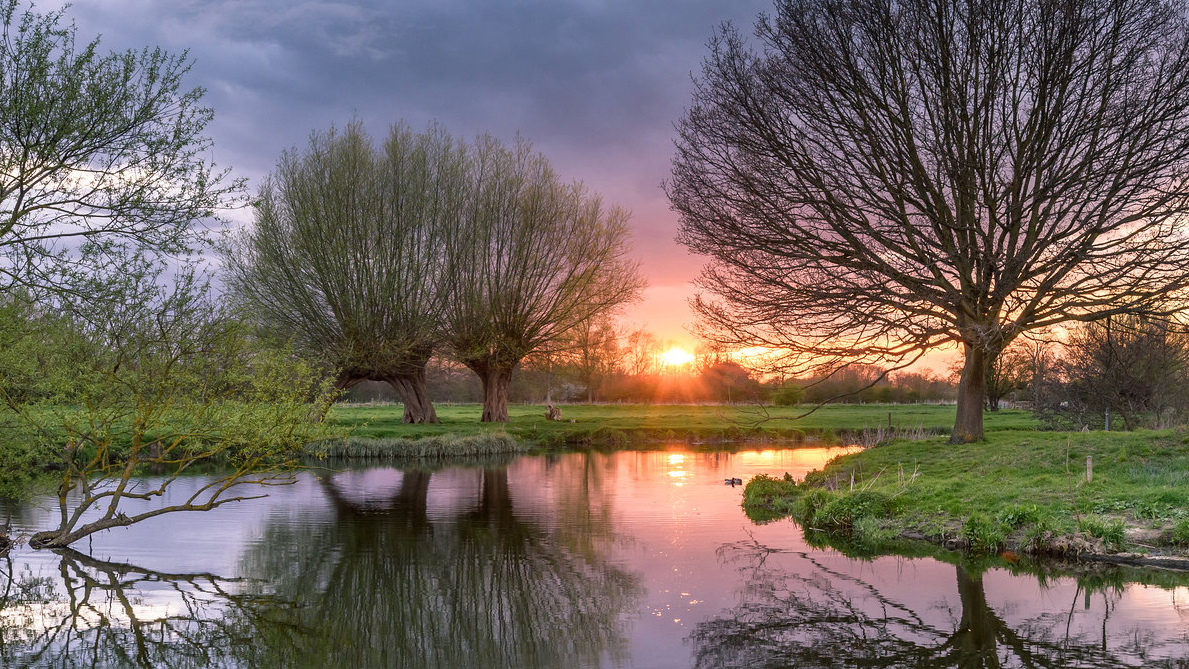
Image: Sunset over the river Stour near Dedham © Nick Rowland
 Archived Habitat Factsheet, 2020 (PDF) Superseded – provided for reference only.