
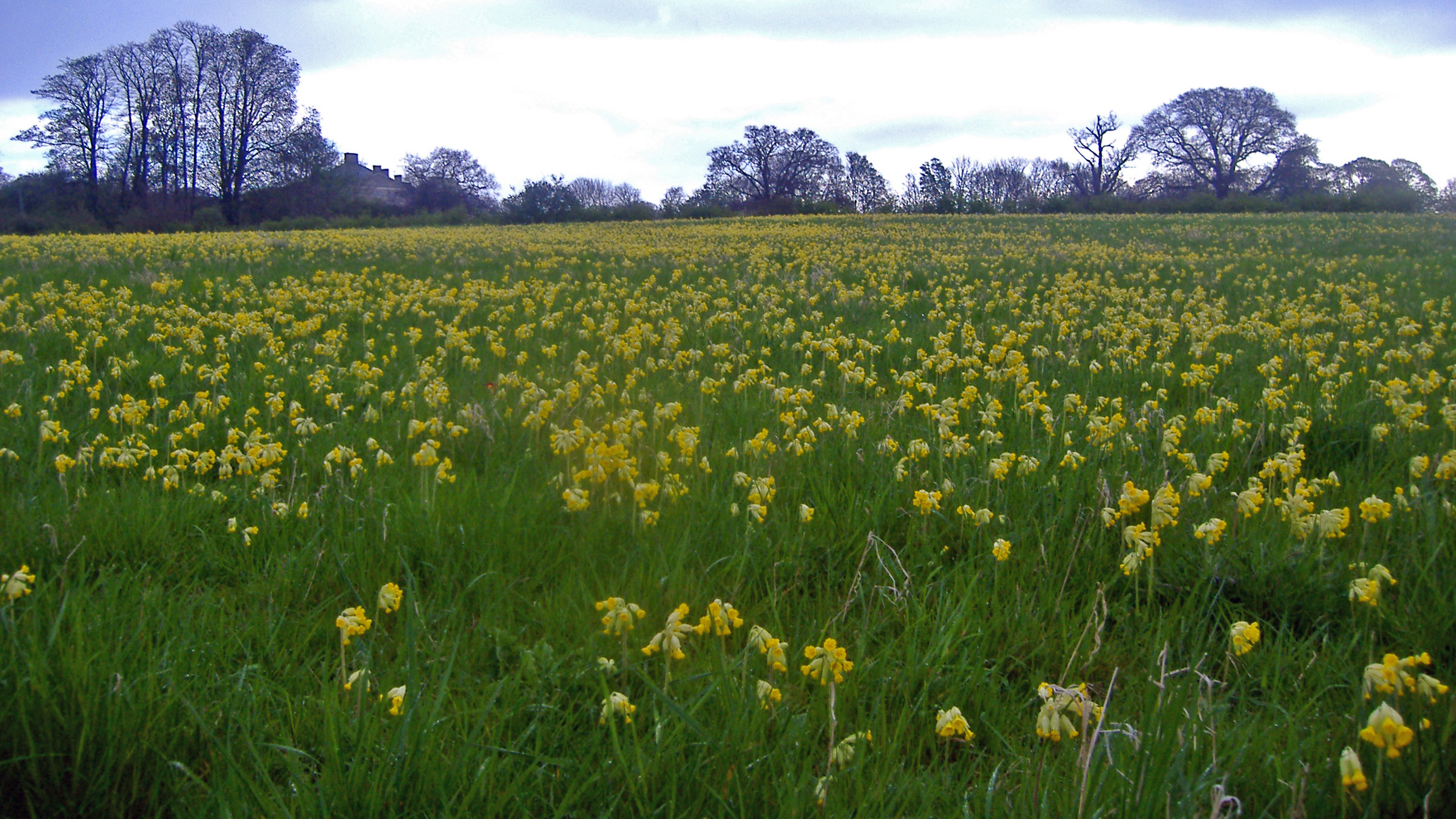
Meadows
Meadows are among Britain’s most threatened habitats. More than 97% of England’s flower-rich meadows were lost between 1930 and the end of the twentieth century to agricultural improvement, and what remains is largely confined to small, isolated fragments – road verges, churchyards, ancient pastures and a handful of managed nature reserves. Suffolk’s surviving meadows are ecologically significant far beyond their modest extent: species-rich neutral grassland on well-drained soils, maintained by centuries of hay-cutting and aftermath grazing, supports plant communities of exceptional diversity alongside the invertebrates, birds and small mammals that depend on them.
Defining features
- Hay meadows on well-drained neutral soils, characterised by a grassy sward with an abundance of flowering herbs and fine-leaved grasses.
- Developed from, and maintained by, traditional management: late hay-cutting followed by aftermath grazing, or light livestock grazing throughout the season. Continuity of management on the same ground over many generations is what produces the most species-rich swards.
- Characterised by fine-leaved grass species, including Sweet Vernal Grass – which gives hay its distinctive scent – alongside a diverse community of flowering plants that would be eliminated by fertiliser application or reseeding.
- Home to uncommon plant species and an important food source for pollinators, invertebrates and the birds and small mammals that feed on them.
Importance for wildlife
The conservation importance of meadows rests on the combination of plant species richness and the invertebrate diversity that richness sustains. Where agricultural improvement has been avoided, and traditional management maintained, neutral grassland swards can contain 30 or more flowering plant species per square metre – a diversity that no managed or restored grassland can quickly achieve, because it depends on accumulated seed banks, mycorrhizal networks and soil conditions that develop only over decades and centuries. The variety and abundance of flowering plants in semi-natural meadows provides pollen and nectar across a long season, supporting bumblebees, hoverflies, butterflies and moths that are declining rapidly in the wider countryside. The rich invertebrate populations sustained by this floral diversity in turn provide food for birds, bats and small mammals.
Meadows with a consistently high water table, or with seasonally wet flushes and damp hollows within an otherwise dry sward, are particularly valuable. These wetter areas support additional plant communities and provide the invertebrate-rich, poached ground that breeding waders such as Lapwing, Curlew and Snipe depend on, alongside the foraging conditions for Yellow Wagtail, Barn Owl and other farmland birds in steep decline. Small mammals, including Harvest Mouse and Hedgehog, use the longer sward for shelter and foraging, and the structural complexity of traditionally managed meadow provides conditions unavailable in the uniform, intensively managed grassland that dominates the wider agricultural landscape.
Important associated species
Species marked * are Suffolk Priority species. Species marked ** are Priority – Research Only: common and widespread, but rapidly declining.
- Ants, Bees and Wasps
Brown-banded Carder Bee, Large Garden Bumblebee, Red-shanked Carder Bee
- Birds
Starling, Black-tailed Godwit, Cuckoo, Curlew, Corn Bunting, Grey Partridge, Yellow Wagtail, Lapwing, Reed Bunting, Skylark, Yellowhammer, Barn Owl *
- Ferns and Flowering Plants
- Mammals
- Moths
Forester, Grey Dagger**, Brown-spot Pinion**, Beaded Chestnut**, Ear Moth**, Dusky Brocade**, Garden Tiger**, Galium Carpet** (coastal), Autumnal Rustic** (light sandy soils), Spinach**, Garden Dart**, White-line Dart**, Small Emerald**, Ghost Moth**
- Reptiles and Amphibians
Factors affecting this habitat in Suffolk
- Agricultural improvement remains the primary threat: drainage, ploughing, reseeding with improved grass varieties, application of fertilisers, pesticides and herbicides, conversion to arable cultivation and a shift from hay-making to silage production – all of which rapidly and irreversibly alter the plant community.
- Neglect through a decline in livestock farming and the low commercial value of hay and species-rich pasture, leading to abandonment, rank growth and eventual scrub encroachment.
- The isolation and small size of many surviving meadow fragments makes management economically unviable: standard agricultural machinery cannot be used on the smallest sites, and the cost of specialist small-scale management is not recoverable from hay sales.
- Inappropriate management regimes on non-agricultural sites, including intensive horse grazing, regular topping and cutting at the wrong time of year, which prevent plants from flowering and setting seed.
- Changes in the timing of hay cutting, typically cutting earlier in the season than traditional management prescribes, which prevents many plants from completing their life cycle before the sward is removed.
- Dehydration through lowered water tables resulting from water abstraction and the increasing frequency of summer drought, which alters plant community composition and reduces the damp conditions on which the most diverse meadow communities depend.
- Eutrophication through atmospheric nitrogen deposition and agricultural run-off, which promotes competitive grass species and suppresses the diversity of low-growing herbs.
Habitat management advice
- Never apply fertilisers, herbicides or drainage improvements. Even modest nutrient inputs will shift the sward composition towards competitive grass species within a few seasons, and the specialist plant community is unlikely to recover without extensive intervention. Apply small amounts of well-rotted farmyard manure only – and only where historically appropriate – at a maximum rate of 2.5 tonnes per hectare per year.
- Where the historical management of the site has been for hay production, continue this regime. Delay cutting until after mid-July to allow plants to flower and set seed; remove all cuttings from the site to avoid nutrient enrichment. Follow with aftermath grazing in late summer and autumn to keep the sward low and assist seed germination.
- Where grazing is used as the primary management tool, favour light cattle grazing over horse or sheep grazing. Cattle produce a more varied sward structure and are less selective in their grazing than horses, which tend to create an over-uniformly close-cropped sward. Remove livestock in very wet conditions to avoid poaching damage to plant communities.
- Control encroaching scrub and tussock-forming rushes by cutting, removing all arisings from the site. Machinery should only be used where ground conditions allow without damaging the soil structure. Do not allow scrub to establish; once it shades the sward, recovery is difficult and slow.
- Do not plant trees on lowland meadow. Shade and leaf litter from even scattered trees can cause localised loss of grassland plants and a progressive decline in botanical diversity, and the disturbance of planting itself damages the soil structure and seed bank.
- Do not use meadow as a supplementary feeding area or for hay or equipment storage. Localised nutrient enrichment from feeding and poaching damage from heavy machinery or stock congregating around feeders degrades the plant community rapidly.
Finding and recording Suffolk’s meadows
Many of Suffolk’s surviving meadow fragments are small, undesignated and inadequately recorded. Road verges, churchyards, ancient common land and long-established pastures on difficult-to-cultivate ground are among the most likely locations for unrecorded species-rich grassland. If you manage, visit or know of a site that may be a traditional meadow or species-rich grassland, recording the plants present and submitting your records to SBIS helps build the county-wide picture of where this habitat survives. SBIS holds the most comprehensive dataset of meadow sites and associated species records in Suffolk and can provide guidance on assessment and management for owners and managers of potential meadow sites.
Vision for Suffolk
The following priorities reflect the strategic goals for lowland meadows and pastures in Suffolk, drawing on both the Biodiversity Action Plan framework and the Local Nature Recovery Strategy.
- Improve knowledge of the extent and condition of lowland meadows across the county, including unrecorded fragments on road verges, churchyards and unimproved pastures.
- Maintain the existing extent of lowland meadows to ensure no net loss.
- Re-create lowland meadows where opportunities arise, using locally sourced seed and green hay transfer from donor meadows rather than commercial wildflower mixes.
- Encourage the restoration and improvement of degraded meadows, recognising that recovery of full botanical diversity from improved grassland is a long-term process requiring sustained management and realistic expectations.
Further information
- Buglife – Advice on managing lowland meadows
- Buglife – Notable invertebrates associated with lowland meadows (PDF)
- JNCC – Habitat description: Lowland Meadows (PDF)
- MAGIC – Interactive mapping including designations
- Natural England – An illustrated guide to managing neutral pasture for wildlife (TIN088), 2011
- Plantlife – Meadows hub
- Suffolk Wildlife Trust – Habitats Explorer: Lowland meadow and pasture
- Making Space for Nature – Lawton Review, Defra, 2010 (PDF, historical reference)
- The Natural Choice: Securing the Value of Nature – Natural Environment White Paper, 2011 (PDF, historical reference)
Suffolk’s Meadow and Pasture Habitats
Key
A conservation priority in Suffolk’s Historic Biodiversity Action Plan.
A key habitat for recovery under Suffolk’s Local Nature Recovery Strategy.

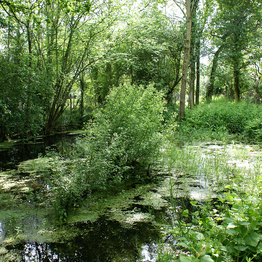

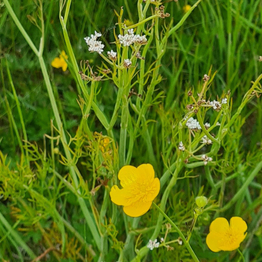

Meadows are primarily a part of the Meadow and Pasture habitat group, but also feature in these habitat groups: Farmed Landscapes and Wider Countryside, Grass and Heath and River and Riverside.
Image: Cowslips © Paul Clarke
 Archived Habitat Factsheet (PDF, 2020) Superseded – provided for reference only.
 Archived Suffolk BAP action plan (PDF, 2007) Superseded – provided for reference only.