
Farmed Landscape and Wider Countryside
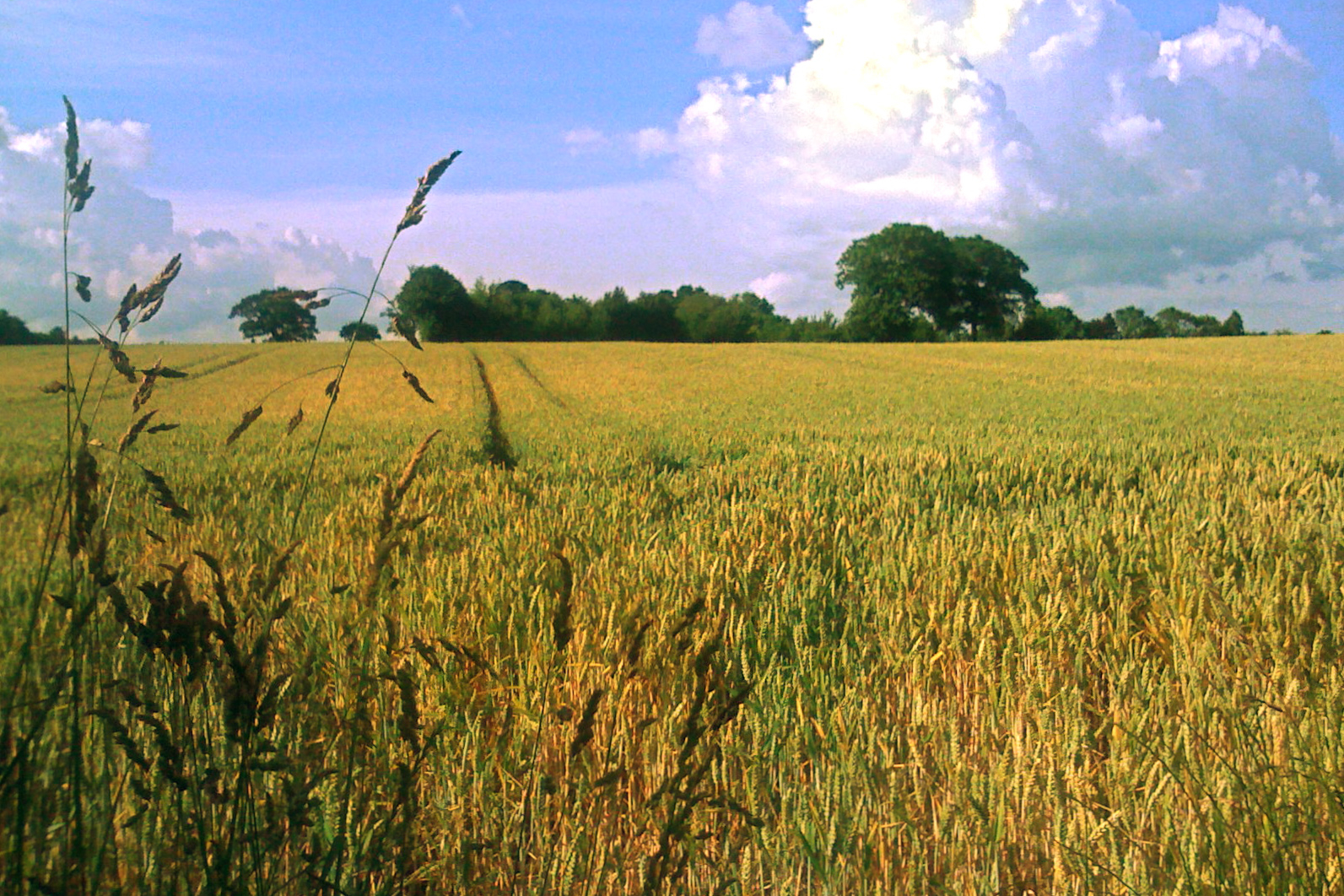
Agriculture defines Suffolk’s landscape. Over 75% of the county is under some form of agricultural management, a proportion that reflects the quality of Suffolk’s soils – particularly the heavy boulder clays of the central and northern plateau and the lighter, more tractable soils of the sandier south and east. This long history of cultivation has shaped the county’s biodiversity, either by driving species to the margins or, where traditional practices persist, by sustaining habitats and species that have nowhere else to go.
Arable field margins, hedgerows, grass buffer strips and farm woodland edges are the structural features that determine how much wildlife a farmed landscape can support. In a county where the field centres have been largely emptied of biodiversity through the intensification of the mid-twentieth century, these marginal habitats carry disproportionate ecological weight. They provide nesting cover, foraging habitat, movement corridors and overwintering refuges for a wide range of farmland birds, small mammals, invertebrates and plants. Their loss – through hedge removal, margin cultivation or the drift of agrochemicals – has been one of the principal drivers of the catastrophic declines in farmland wildlife recorded since the 1970s.
The turtle dove (Streptopelia turtur) is the flagship species for this assemblage and one of Britain’s most urgent conservation priorities. The UK breeding population has declined by over 98% since 1970, and East Anglia, including Suffolk, now represents the last substantial stronghold. The turtle dove’s requirements are specific: dense hedgerow cover for nesting, open ground with a supply of small seeds for foraging, and shallow water for drinking. Operation Turtle Dove, operating across Suffolk and neighbouring counties, has demonstrated that targeted habitat management can slow and locally reverse declines, but recovery at a meaningful scale requires a landscape-level commitment to wildlife-friendly farming across the county.
Suffolk’s Farmed Landscape and Wider Countryside Habitats
Key
A conservation priority in Suffolk’s Historic Biodiversity Action Plan.
A key habitat for recovery under Suffolk’s Local Nature Recovery Strategy.




Associated habitats
Conifer plantations: The large conifer plantations of the Sandlings and Breckland – principally Thetford Forest and Rendlesham Forest – support important populations of species that require the open, disturbed conditions created by clear-felling and restocking. Nightjar and Woodlark breed in newly felled and restocked areas; both are at their highest densities in large open clearings within the plantation matrix. As forest management increasingly incorporates biodiversity targets, the rotation of clear-fell areas and the retention of heathland patches and open rides within plantation blocks is becoming more consistent.
Farm woodland edges and shelterbelts: The transitional zone between farmland and woodland, and linear tree belts planted to shelter crops and livestock, contribute significantly to the biodiversity of the farmed landscape. These features provide nesting, foraging and roosting habitat for birds, bats and invertebrates, and can act as stepping stones linking more extensive woodland blocks. Shelterbelts with a well-developed shrub understorey and structural diversity tend to hold the greatest wildlife value.
Grass margins and buffer strips: Field margins and buffer strips managed as permanent grassland provide refuges for wildlife within an otherwise intensively farmed landscape. Even narrow strips can support populations of flowering plants, bumblebees, beetles and small mammals, and act as corridors connecting larger habitat patches. The value of these features increases considerably where they are managed sympathetically – avoiding fertilisers and cutting at the right time of year.
Green lanes: Green lanes – unsurfaced or lightly surfaced tracks enclosed by hedgerows, banks or ditches – are among the most undisturbed linear habitats in the farmed landscape. Their sheltered, unimproved grassland strips may have escaped agricultural improvement for centuries and can retain semi-natural plant communities, rare mosses and lichens, and provide movement corridors for invertebrates and small mammals across an otherwise hostile arable matrix.
Hedgerow trees and isolated field trees: Trees growing within hedgerows or standing alone in the open landscape contribute significantly to the ecological connectivity and structural diversity of the farmed countryside. They provide nesting and roosting habitat for birds and bats, foraging resources for pollinators and other insects, and can act as stepping stones linking woodland blocks. As these trees age, they increasingly take on the character of veteran habitat, and their long-term retention within the landscape is essential for sustaining populations of species dependent on mature timber.
Quarries and mineral extraction sites: Working and former quarries, particularly chalk and sand pits, support open habitat communities similar to those of brownfield land. The combination of bare ground, sparse vegetation and warm, south-facing slopes provides conditions for specialist invertebrates, reptiles and some of the county’s rarest plants.
Road verges: Road verges collectively cover a considerable area of Suffolk and, where managed sympathetically – with late cutting after seed set and no herbicide application – can support diverse plant communities including species that have been lost from the surrounding countryside. Breckland verges are of particular importance, supporting some of the county’s rarest plants in the absence of other suitable habitat. The management of road verges for biodiversity is a priority in the Suffolk LNRS, with an emphasis on late cutting, the removal of arisings and the mapping of botanically important verges before any management changes are made.
River banks: River banks provide habitat continuity through the farmed landscape, connecting wetland and woodland patches along their length and supporting iconic mammal species that require the combination of good bank structure, clean water and riparian vegetation. Otter has returned to all of Suffolk’s main river systems; Water Vole persists along a number of corridors but requires active management and protection from mink predation to maintain viable populations.
Wet ditches and drainage channels: The network of ditches and drainage channels crossing Suffolk’s lowland farmland, grazing marshes and river valleys constitutes a significant freshwater habitat in its own right. Well-maintained ditches with clean water and diverse aquatic vegetation support rare plants such as greater bladderwort and various pondweeds, along with water voles, great crested newts, dragonflies and specialist aquatic beetles. Their value depends heavily on water quality, management frequency and connectivity to broader wetland systems.
Image: © Adam Tinworth, Flickr