
Ponds and Lakes
Ponds and lakes – standing water bodies isolated from rivers and streams, fed only by rainwater or groundwater – support roughly two-thirds of all freshwater species despite covering a fraction of the total freshwater surface area. Suffolk’s ponds range from the extraordinary pingos of the Brecks, shallow ancient pools formed at the end of the last ice age, to farm ponds, parkland lakes and seasonal clay-woodland pools. Their ecological value is often determined less by size than by water quality, bank profile and the condition of the surrounding land, and many of the county’s highest-quality examples are small and easily overlooked.
Defining features
- Permanent and seasonal standing water bodies, isolated from other watercourses and fed only by rainwater or groundwater.
- Encompasses a broad range of water body types, from large lakes and parkland ponds to small farm ponds, pingos, seasonal pools and clay-pit water bodies.
- Margins typically support a community of plants, invertebrates and other species that equals or exceeds the open water in conservation importance.
- High-quality ponds – characterised by low nutrient levels, clean water, structural diversity and gently sloping margins – form particularly significant elements of the landscape.
Importance for wildlife
Despite their often modest size, ponds provide habitat and food resources for a remarkable breadth of species. They are the primary breeding habitat for all of Suffolk’s amphibians and are used extensively by bats, mammals, birds and a wide range of invertebrates. The diversity of a pond community is strongly influenced by water quality: unpolluted, low-nutrient ponds with little management pressure support the richest assemblages, including rare charophyte algae such as Bearded Stonewort and Tassel Stonewort, which are highly sensitive to enrichment and are indicators of exceptional water quality.
Suffolk’s ponds support wildlife of significance at the European scale. Great Crested Newts depend on networks of ponds across the farmed landscape, and the county holds important metapopulations in several areas. The rare aquatic fern Pillwort – nationally scarce and declining – persists at a handful of Suffolk ponds, as does Frogbit Smut, an equally rare fungal associate. Ponds also provide drinking water, foraging habitat and connectivity resources for non-aquatic species, including Otters, Water Shrews and foraging bats, and are an integral component of the wider wetland landscape.
Important associated species
Species marked * are Suffolk Priority species. Species marked ** are Priority – Research Only: common and widespread, but rapidly declining.
- Beetles
- Ferns and Flowering Plants
- Freshwater Algae
- Fungi and Slime Moulds
Frogbit Smut
- Liverworts and Mosses
- Mammals
Water Shrew *, Common Pipistrelle *, Nathusius' Pipistrelle *, Daubenton's Bat *, Otter
- Reptiles and Amphibians
Common Frog, Smooth Newt, Great Crested Newt, Common Toad
Factors affecting this habitat in Suffolk
- Pollution and nutrient enrichment from agricultural and urban run-off, which damages aquatic communities, promotes algal growth, and causes the loss of the sensitive, low-nutrient conditions on which many specialist species depend.
- Infilling for farming and development. Ponds are frequently regarded as expendable features of the landscape and continue to be lost at a significant rate.
- Introduction of non-native plants and animals, including fish species introduced for angling, which can eliminate rare invertebrate and plant communities, alter water chemistry and disrupt the ecological balance of the pond.
- Recreation and sporting use, including disturbance to wildfowl, trampling of marginal vegetation and the stirring up of sediments by boats, which destroys aquatic plant communities and contributes to enrichment.
- Changes in water supply and throughput resulting from water abstraction or altered drainage, which can change the character and permanence of a water body. Rising water temperatures also accelerate plant growth and alter community composition.
- Loss of temporary and seasonal pools, which have exceptional conservation value for specialist invertebrates and amphibians that depend on their periodic drying out.
Habitat management advice
- Maintain natural processes wherever possible. The guiding principle is continuity: phased, rotational management that preserves a mosaic of successional stages across the site and its margins will deliver the greatest benefit for the widest range of species.
- Before undertaking any management, assess the existing conservation value of the pond. Removing vegetation to create diversity risks eliminating fauna that depend on a particular margin type.
- Maintain habitat heterogeneity across the site. Margins typically support greater biodiversity than open water; aim for a mix of emergent and submerged vegetation, bare marginal substrate and open water. Both shaded and unshaded ponds have value for different species: avoid opening up a shaded woodland pond without a clear conservation reason for doing so.
- Avoid over-management. All successional stages have ecological value, and frequent intervention can be more damaging than inaction.
- Maintain water quality and stable water levels. Avoid activities or inputs that increase nutrient levels or disturb the sediment.
- Retain temporary and seasonal pools: do not fill them in or excavate them to create permanent water bodies. Their periodic drying is ecologically important.
- Maintain gently sloping bank profiles to maximise the extent of shallow water and marginal habitat available to amphibians, invertebrates and other species.
- Where sediment or vegetation must be removed, carry out the work in August, when overwintering individuals and pupating invertebrates are unlikely to be present. Avoid work between April and June.
- Use light grazing around the pond margin to prevent scrub invasion, but manage stock access to avoid excessive poaching of banks or nutrient enrichment from dung entering the water.
- Minimise disturbance from recreational use, particularly during the amphibian breeding season in spring.
Pingos of the Brecks
Among Suffolk’s most unusual water bodies are the pingos of the Brecks – shallow, roughly circular pools formed by periglacial processes at the close of the last ice age, when the melting of underground ice lenses left depressions in the landscape. These ancient features, found in the Breckland landscape straddling the Suffolk-Norfolk border, support communities of aquatic plants and invertebrates that are exceptionally rare in lowland England, including stoneworts, specialist beetles and other species associated with clean, low-nutrient, base-rich water that has remained relatively undisturbed for thousands of years. Their age and isolation from agricultural influence make them among the highest-quality standing water habitats in the region.
Vision for Suffolk
The following priorities reflect the strategic goals for ponds and lakes in Suffolk, drawing on both the Biodiversity Action Plan framework and the Local Nature Recovery Strategy.
- Improve knowledge of the extent and condition of ponds and lakes across the county.
- Maintain the existing extent of ponds and lakes to ensure no net loss, with a particular focus on halting the ongoing loss of farm ponds and temporary pools.
- Re-create ponds where opportunities arise, prioritising locations within or adjacent to existing networks of high-quality water bodies.
- Encourage the restoration and improvement of degraded ponds, particularly those affected by nutrient enrichment, shading or vegetation encroachment.
Further information
- Freshwater Habitats Trust – Managing your pond
- JNCC – Habitat description: Ponds and Lakes (PDF)
- MAGIC – Interactive mapping including designations
- Suffolk Wildlife Trust – Suffolk Ponds Group
- Suffolk Wildlife Trust – Habitats Explorer: Rivers and wetlands
- Making Space for Nature – Lawton Review, Defra, 2010 (PDF, historical reference)
- The Natural Choice: Securing the Value of Nature – Natural Environment White Paper, 2011 (PDF, historical reference)
Suffolk’s Still Water Habitats
Key
A conservation priority in Suffolk’s Historic Biodiversity Action Plan.
A key habitat for recovery under Suffolk’s Local Nature Recovery Strategy.

Ponds & Lakes are primarily a part of the Still Water habitat group, but also feature in these habitat groups: Farmed Landscapes and Wider Countryside, Fen, Meadow and Pasture, Reedbed and Wetland, River and Riverside and Urban, Built and Garden.
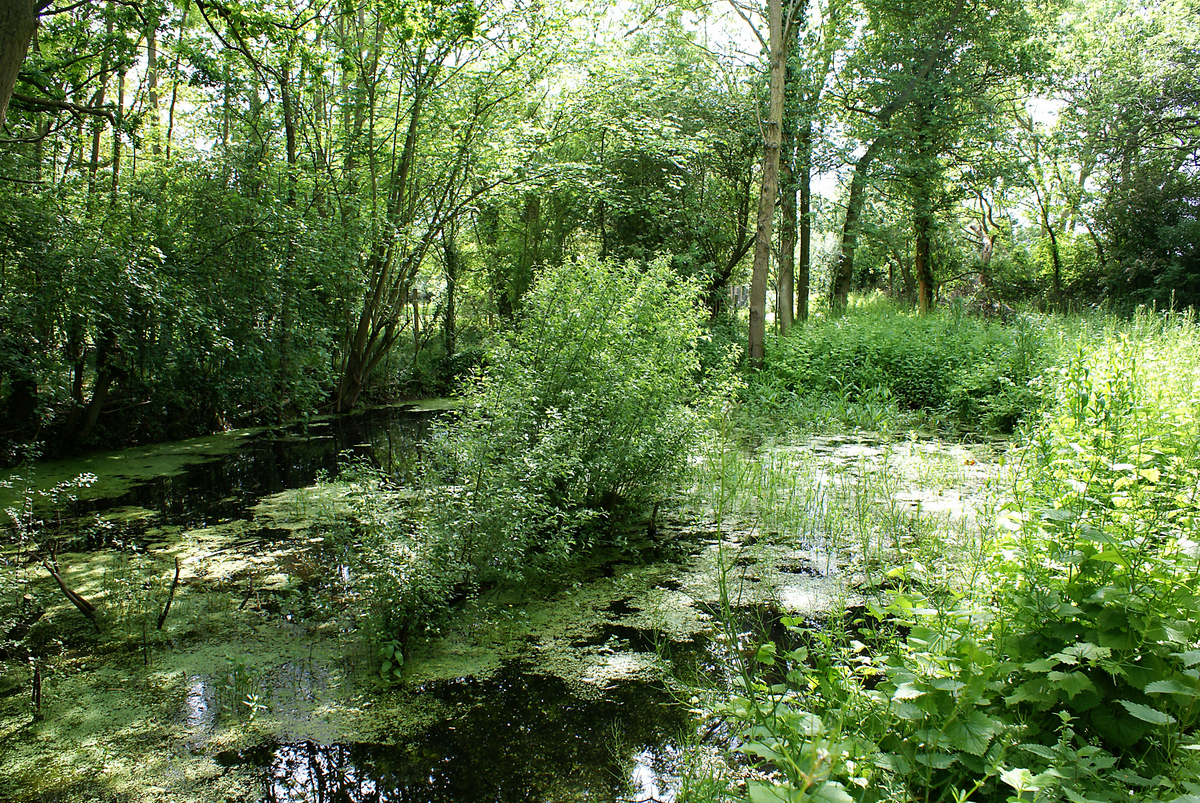
Image: Pond at Little Welnetham © Martin Pettitt
 Archived Habitat Factsheet (PDF, 2020) Superseded – provided for reference only.
 Archived Suffolk BAP action plan (PDF, 2007) Superseded – provided for reference only.