
Built Environment
Suffolk’s towns, villages and the spaces between them support a surprising diversity of wildlife. Old buildings provide roosts for bats and nesting sites for Swift, House Sparrow and Starling; churchyards and cemeteries retain areas of unimproved grassland and veteran trees that have been undisturbed for centuries; gardens collectively cover more ground than all the county’s nature reserves combined and provide habitat, food and movement corridors for a wide range of species. Priority species are not confined to designated nature reserves or semi-natural habitats – they are found across the built environment, often in the most unexpected places, and the decisions made by individuals, community groups, developers and local authorities about how to manage urban and suburban green space have a direct and measurable effect on the county’s wildlife.
Important associated species
The following species are associated with the built environment generally and may be found across a range of urban and suburban habitats.
Species marked * are Suffolk Priority species.
- Ants, Bees and Wasps
Weevil Hunting Wasp, Five-banded Tailed Digger Wasp, Large Garden Bumblebee
- Beetles
Stag Beetle (Ipswich and Woodbridge areas), Necklace Ground Beetle
- Birds
Swift *, House Sparrow, Starling, Dunnock, Song Thrush, Herring Gull subsp. argenteus, Marsh Tit (rural gardens)
- Butterflies
- Ferns and Flowering Plants
- Liverworts and Mosses
- Mammals
Hedgehog, Harvest Mouse (parks), Common Pipistrelle *, Brown Long-eared Bat
- Moths
- Reptiles and Amphibians
Adder *, Common Lizard, Slow-worm, Grass Snake, Great Crested Newt, Common Toad
Built environment habitats
Buildings and infrastructure: Old and historic buildings provide a range of roost types for bats – crevices, tiles and boarding supporting Common Pipistrelle and Soprano Pipistrelle, while larger voids in church towers and roof spaces are used by Brown Long-eared Bat. Swift, House Sparrow and Starling all nest in or on buildings and have declined significantly as building renovation, improved insulation and changes in construction have eliminated the gaps and cavities they depend on. Swift bricks and boxes, House Sparrow terrace boxes and similar features, incorporated at the design stage of new and renovated buildings, can partly offset these losses at minimal cost.
Green roofs and living walls: Vegetated roof and wall systems installed on buildings provide habitat in locations where ground-level greenspace is absent or inaccessible. Biodiverse green roofs – designed with varied substrate depths, open areas and flowering plants – can support invertebrates, nesting birds, and even breeding black redstarts in the right urban contexts. As planning requirements increasingly mandate green infrastructure in new developments, these features have the potential to make a meaningful contribution to urban biodiversity at a landscape scale.
Road verges, railway lines and green corridors: The road verge network in Suffolk covers a significant area and, where managed appropriately with late cutting and no herbicide application, can support diverse plant communities including species that have been lost from the surrounding countryside. Green corridors – including road verges, cycle paths, disused railway lines and river banks – are important routes for wildlife movement through the built environment, enabling species to reach isolated greenspace patches that would otherwise be inaccessible. Management of these corridors for biodiversity, coordinated across local authority boundaries, is a priority in the Suffolk LNRS.
Street trees and urban tree canopy: Trees lining streets and forming the broader urban canopy provide a range of ecological functions in the built environment, from moderating temperature and intercepting rainfall to providing foraging, nesting and roosting habitat for urban wildlife. Native species with high invertebrate association values – particularly oaks, willows and cherries – are of greatest ecological benefit, and older trees with developing bark texture and cavity features hold considerably more value than newly planted stock. Expanding and diversifying the urban tree canopy is a recognised priority for both climate adaptation and nature recovery.
Golf courses: Golf courses managed with wildlife in mind can support significant populations of farmland birds. Rough areas, hedgerows and scrub at course margins provide nesting habitat for Skylark, Linnet, Yellowhammer and Corn Bunting; Woodlark breeds on some Sandlings courses. The management of rough and semi-rough areas to avoid fertiliser application and maintain low-input conditions is the single most important factor in determining their wildlife value.
Guidance for developers and land managers
The Suffolk LNRS identifies several priorities for the built environment that are relevant to planning, development and green space management:
- Incorporate wildlife features – swift bricks, bat boxes, hedgehog access holes, native hedgerows and trees – into new buildings and developments at the design stage.
- Retain ponds and create new ones in development sites, incorporating Sustainable Drainage Systems (SuDS) features such as swales, rain gardens and permeable paving that also provide habitat for amphibians and invertebrates.
- Ensure lighting schemes minimise impacts on wildlife by using appropriate wavelengths, intensities and timing to avoid disrupting bats, moths and other light-sensitive species.
- Develop and manage school grounds for biodiversity as an educational resource and contribution to local nature recovery.
- Improve the management of road verges and public green spaces for biodiversity, coordinated through local authority biodiversity plans.
- Retain and create green corridors and stepping-stone habitats within development plans to maintain ecological connectivity across the built landscape.
Recording wildlife in towns and villages
Urban and suburban records are among the most valuable contributions to the SBIS dataset. The distribution of species such as Stag Beetle, Swift, House Sparrow, Hedgehog and Common Toad in Suffolk’s towns is poorly mapped relative to their countryside populations, and records from gardens, parks, churchyards and streets fill a genuine gap. If you encounter wildlife in or around the built environment – whether a bat roosting in a building, a Swift nesting colony, a Hedgehog in a garden or an unusual plant on a wall or verge – please submit your sighting via the SBIS recording forms or through iRecord.
Further information
- Bat Conservation Trust – Bats and the built environment
- MAGIC – Interactive mapping including designations
- Suffolk Wildlife Trust – SOS Swifts
- Suffolk Wildlife Trust – Habitats Explorer: Towns and gardens
- Trees and Design Action Group – Trees in the built environment
Suffolk’s Urban, Built and Garden Habitats
Key
A conservation priority in Suffolk’s Historic Biodiversity Action Plan.
A key habitat for recovery under Suffolk’s Local Nature Recovery Strategy.




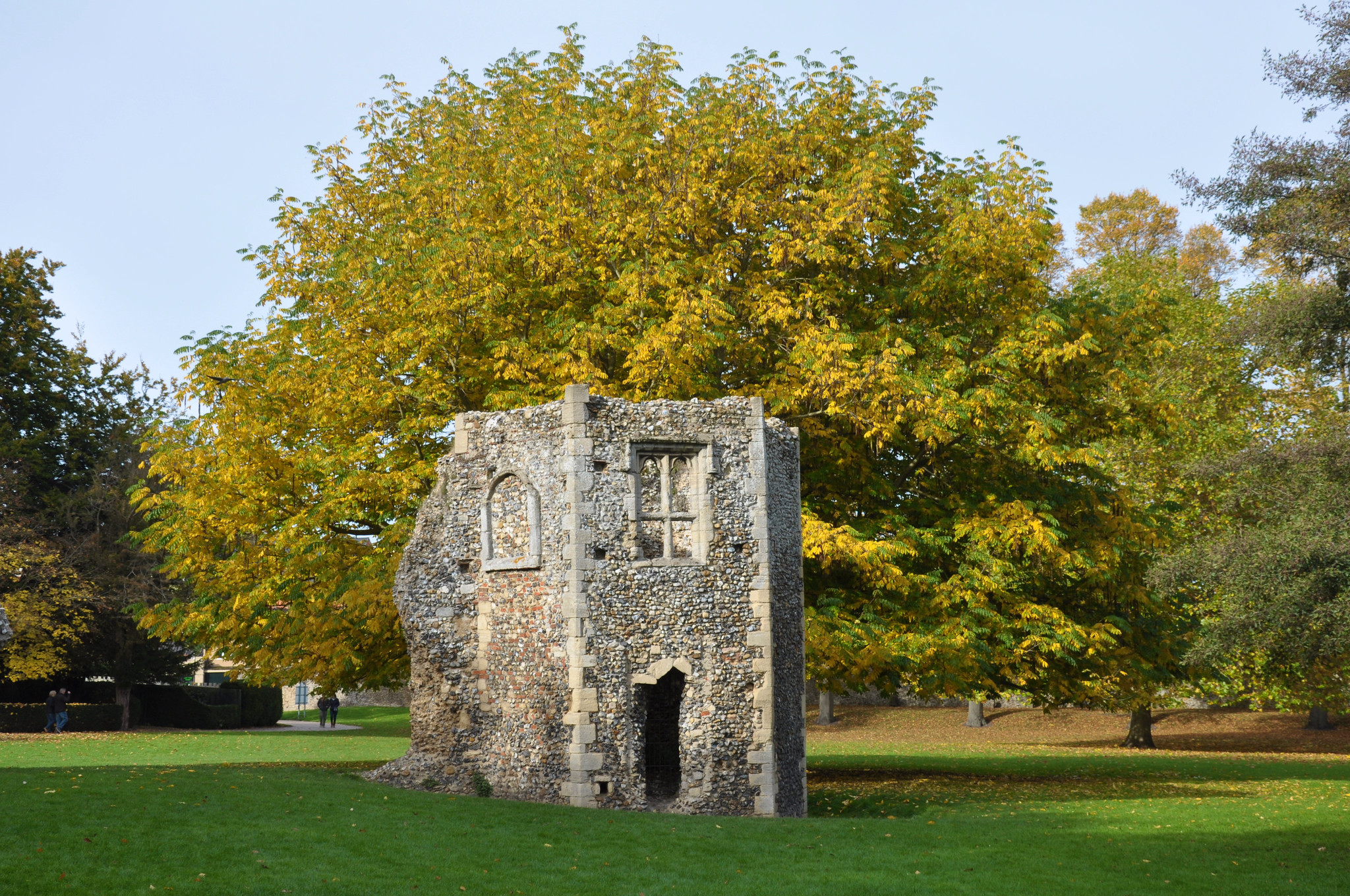
Image: Abbey Gardens, Bury St Edmunds © Martin Pettitt