
Open Mosaic
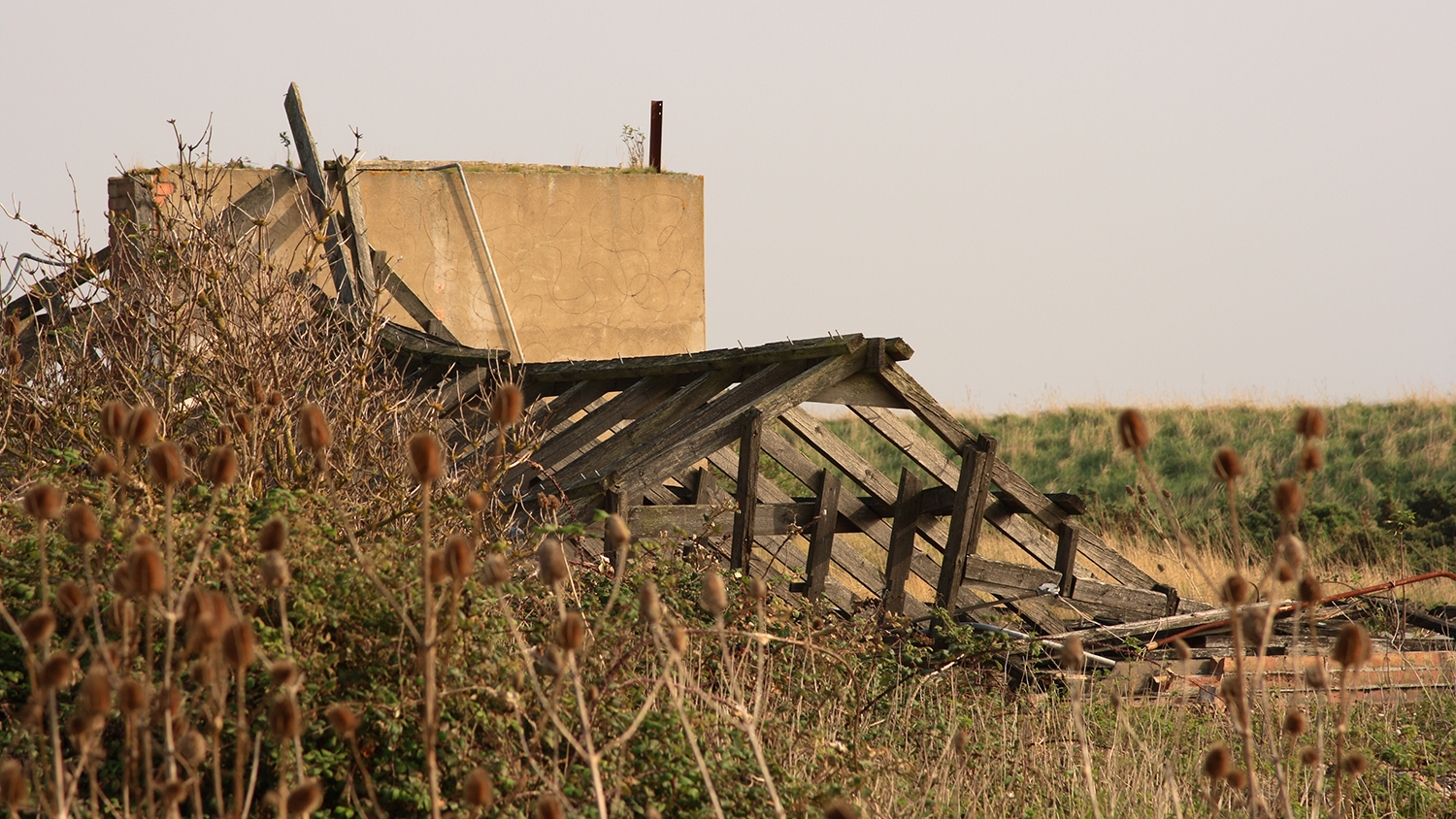
Open mosaic – vegetated brownfield land of at least 0.25 hectares altered by human activity – is among the most undervalued wildlife habitats in Britain. Former industrial estates, quarries, spoil heaps, disused railways, landfill sites and old airfields can support invertebrate diversity rivalling ancient woodland, precisely because their disturbed, nutrient-poor soils and cyclical disturbance prevent the competitive exclusion that drives habitat homogenisation elsewhere. Suffolk has a significant resource of open mosaic habitat, concentrated particularly around former military airfields, coastal industrial sites and the edges of its towns, much of it poorly recorded and at constant risk of development or inappropriate restoration.
Defining features
- Any piece of vegetated land of at least 0.25 hectares that has been altered by human activity. Also referred to as brownfield habitat, these sites are highly varied in origin, including former industrial estates, quarries, spoil heaps, disused railway lines, landfill sites and disused airfields.
- Unvegetated areas, loose bare substrate and standing pools may be present alongside vegetated ground, forming a mosaic of early successional communities at different stages of development.
- Low-nutrient soils and cyclic disturbance are the key ecological drivers, preventing dominance by competitive vegetation and allowing a wide range of specialist species to persist.
- Spatial variation in substrate, moisture, aspect and vegetation structure is what gives these sites their ecological value: the mosaic itself, rather than any single habitat type within it, is the defining feature.
Importance for wildlife
Open mosaics owe their exceptional biodiversity to conditions that conventional conservation management rarely creates deliberately: nutrient-poor, warm, freely draining substrates with bare ground, loose material, standing water and vegetation at all stages of succession in close proximity. This structural complexity supports a breadth of invertebrate species that can match ancient woodland in the number of rare and notable species, including ground-nesting bees and wasps, specialist beetles, moths with complex life cycles, and assemblages of invertebrates found nowhere else in the lowland landscape. Many of these species require two or more habitat types within a short distance of each other – it is the mosaic, not any individual component, that makes the site viable.
Beyond invertebrates, open mosaic habitats support a distinctive assemblage of reptiles – Common Lizard and Slow-worm both benefit from the warm, varied ground conditions – and are used by bats, breeding birds and amphibians. Brownfield plants, including several nationally scarce species, colonise disturbed substrates that are unavailable in the wider agricultural landscape. The Wall butterfly, whose populations have declined sharply across Britain, retains a stronghold on warm brownfield sites with bare, south-facing slopes and short, sparse vegetation.
Important associated species
Species marked * are Suffolk Priority species. Species marked ** are Priority – Research Only: common and widespread, but rapidly declining.
- Ants, Bees and Wasps
- Beetles
- Birds
Dunnock, Starling, Song Thrush, House Sparrow, Herring Gull, Swift *
- Butterflies
- Ferns and Flowering Plants
Broad-leaved Cudweed, Red Hemp-Nettle, Annual Knawel, Fine-leaved Sandwort
- Liverworts and Mosses
- Mammals
- Moths
- Reptiles and Amphibians
Factors affecting this habitat in Suffolk
- Development pressure: despite growing acknowledgement of their biodiversity value, brownfield sites are still frequently prioritised for development by local authorities and landowners. The loss of individual sites can fragment or eliminate local populations of specialist species, and the cumulative loss of habitat clusters across an area is likely to have significant negative effects on wildlife.
- Inappropriate restoration: ‘greening’ of brownfield sites is a growing problem, with sites being remediated for use as public open space in ways that destroy their ecological value. This typically involves adding nutrient-rich topsoil, seeding with amenity grass species, planting trees, and imposing intensive management regimes such as regular mowing – all of which eliminate the early-successional features that make these habitats important.
- Neglect and unmanaged succession: without periodic disturbance, open mosaic habitats undergo natural succession towards scrub and eventually woodland, progressively reducing or eliminating the open ground and bare substrate that the most specialist species require.
Habitat management advice
- Recognise that management of open mosaic habitats is different in character from traditional conservation management. The goal is not to achieve a stable end-state but to maintain and renew the mosaic of disturbed and recovering ground, bare substrate, sparse vegetation and scrub that defines the habitat.
- Avoid rigid, prescriptive management schemes applied uniformly across a site. Management should be responsive and rotational, guided by regular monitoring to identify which areas are losing open habitat character and where intervention is needed.
- Operate on a rotational basis, managing only part of the site in any single year. This maintains the full range of successional stages simultaneously, prevents homogenisation and ensures that species dependent on undisturbed ground are not displaced from the entire site at once.
- Avoid using a single management technique across the whole site in a single year. A mix of approaches – scrub clearance, substrate disturbance, light grazing, mowing and deliberate creation of bare ground – applied in rotation produces the structural diversity that underpins the habitat’s ecological value.
- Where scrub clearance is necessary, do so in phases. Leave some scrub as a structural element – it provides shelter, nesting habitat and nectar sources – but prevent it from closing over the open ground entirely.
- Resist pressure to add topsoil, fertiliser or grass seed. Low soil fertility is fundamental to the habitat’s value; enriching the substrate will rapidly shift the plant community towards competitive grasses and eliminate the specialist flora.
Suffolk’s former military airfields
Suffolk’s legacy of Second World War and Cold War military airfields has inadvertently created some of the county’s most important open mosaic habitats. Sites including the former RAF bases at Bentwaters and Woodbridge, and others across the Sandlings and Breckland, retain extensive areas of concrete, gravel, bare ground and early successional vegetation that have remained largely undisturbed since closure. These conditions – warm, nutrient-poor and structurally varied – support assemblages of invertebrates, reptiles and brownfield plants that would be difficult or impossible to recreate deliberately. Their future management and protection from development are among the more significant open mosaic conservation challenges in the county.
Vision for Suffolk
The following priorities reflect the strategic goals for open mosaic habitats in Suffolk, drawing on both the Biodiversity Action Plan framework and the Local Nature Recovery Strategy.
- Improve knowledge of the extent and condition of open mosaic habitats across the county.
- Maintain the existing extent of open mosaic habitats to ensure no net loss, and resist development or inappropriate restoration of wildlife-rich brownfield sites.
- Re-create open mosaic habitats where opportunities arise, particularly on low-grade land adjacent to existing sites.
- Encourage the restoration and improvement of degraded open mosaic habitats, particularly those affected by scrub encroachment or nutrient enrichment.
Further information
- Buglife – Brownfield habitat hub
- JNCC – Habitat description: Open Mosaic Habitats (PDF)
- MAGIC – Interactive mapping including designations
- Suffolk Wildlife Trust – Habitats Explorer: Brownfield
- The Planner – The value of restoring nature to brownfield sites
- The Natural Choice: Securing the Value of Nature – Natural Environment White Paper, 2011 (PDF, historical reference)
Suffolk’s Scrub and Mosaic Habitats
Key
A conservation priority in Suffolk’s Historic Biodiversity Action Plan.
A key habitat for recovery under Suffolk’s Local Nature Recovery Strategy.


Open mosaics are primarily a part of the Scrub and Mosaic habitat group, but also feature in these habitat groups: Grass and Heath and Urban, Built and Garden.
Image: Orford Ness © Emma Aldous
 Archived Habitat Factsheet (PDF, 2020) Superseded – provided for reference only.