
Saltmarsh and Lagoon
Suffolk’s estuaries and intertidal coastline support saltmarsh and saline lagoon habitats of national and European importance. The estuaries of the Stour, Orwell, Deben, Alde and Blyth contain some of the finest intertidal habitat on the English east coast, and together with Essex, the Suffolk coast holds approximately 30% of England’s total saltmarsh extent. This concentration places an exceptional responsibility on Suffolk to steward a habitat that is both globally rare and under acute threat.
Saltmarsh is architecturally complex. From the pioneer zone – colonised by glasswort and annual sea-purslane on bare mud – through the lower and middle marsh dominated by cordgrass, sea aster and sea lavender, to the upper marsh where sea couch and shrubby sea-blite establish, each zone supports a distinct community of invertebrates, breeding birds and seasonal visitors. The productivity of saltmarsh is extraordinary: the decomposing plant material exported on every tide fuels the estuarine food web that sustains the vast flocks of wading birds and wildfowl for which Suffolk’s coast is internationally recognised.
The redshank (Tringa totanus), the assemblage flagship, epitomises the dependence of coastal bird populations on healthy saltmarsh and the adjacent grazing marsh. Its breeding densities in Suffolk’s estuaries rank among the most important in England, and its continued presence is a measure of the structural integrity of the intertidal system. Saline lagoons – particularly at Havergate Island, managed by the RSPB – add a further dimension, providing breeding habitat for avocet and tern species in highly controlled, low-disturbance conditions.
Saltmarsh is also one of the most carbon-dense ecosystems on earth. The waterlogged, anaerobic conditions that preserve organic matter in saltmarsh soils trap carbon at rates that far exceed most terrestrial habitats, making the conservation and restoration of Suffolk’s saltmarshes a component of the county’s response to climate change as well as a straightforward biodiversity priority.
Key
A conservation priority in Suffolk’s Historic Biodiversity Action Plan.
A key habitat for recovery under Suffolk’s Local Nature Recovery Strategy.



Associated habitats
Sheltered muddy gravels: Sheltered intertidal and shallow subtidal areas with mixed mud and gravel substrates support communities of burrowing invertebrates, small crustaceans and molluscs that form a food resource for wading birds and wildfowl. These habitats develop where wave energy is low enough to allow fine sediments to accumulate alongside coarser material, creating a heterogeneous substrate with high biological productivity. In Suffolk’s estuaries and sheltered bays, such areas can be of considerable importance during migration and winter.
Upper saltmarsh and saltmarsh transitions: The upper reaches of saltmarsh, where regular tidal inundation gives way to more occasional flooding, support a transitional community of plants adapted to variable salinity and waterlogging. Sea purslane, sea aster and common saltmarsh grass are typical at lower elevations, while upper fringes may support sea wormwood, sea lavender and a range of halophytic herbs. These transitions are important feeding habitats for waders and wildfowl and are particularly vulnerable to sea-level rise and coastal squeeze.
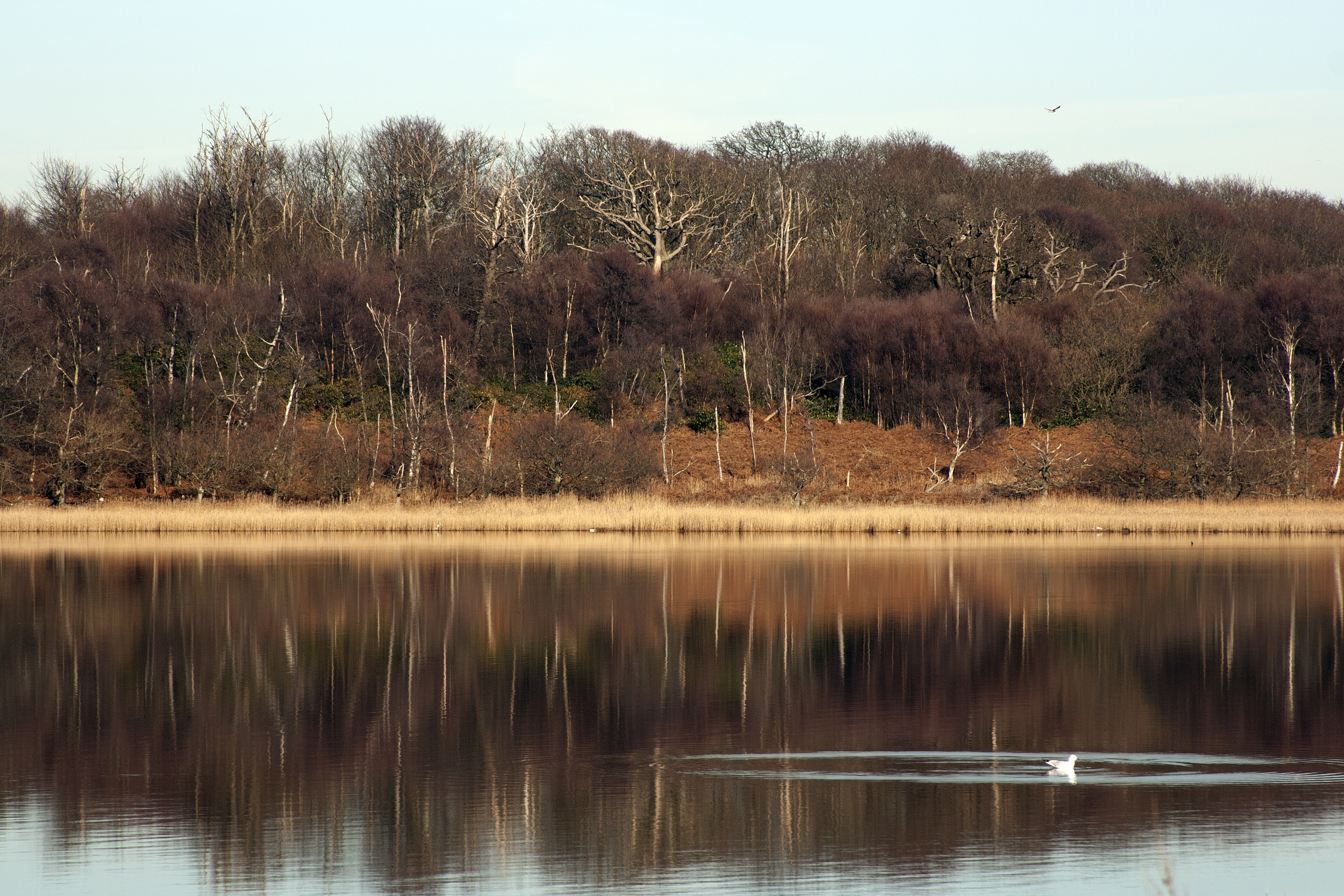
Image: Benacre Broad © Emma Aldous