
Meadow and Pasture
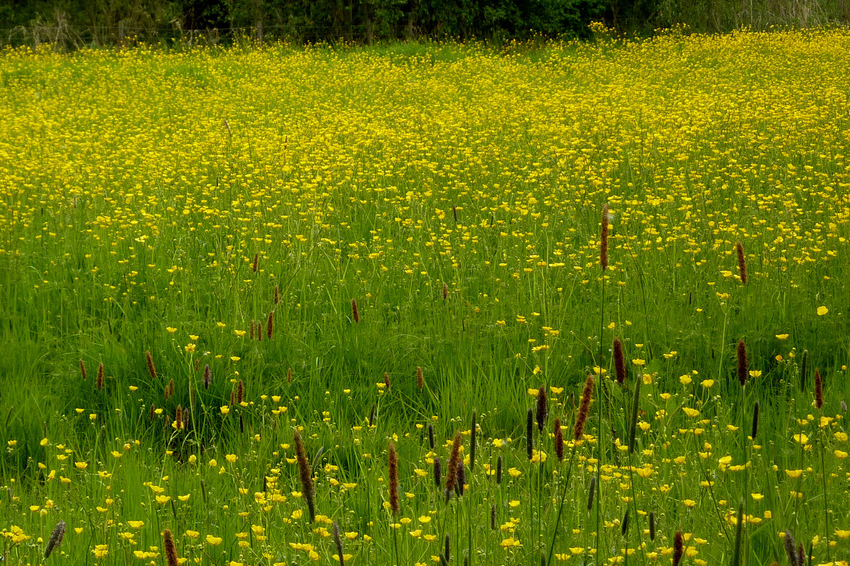
The loss of traditional meadows and species-rich pastures is one of the largest changes to have been wrought on our countryside since the Second World War. National surveys estimate that over 97% of flower-rich grassland has been lost since the 1930s, replaced by agriculturally improved pasture managed under an entirely different – and ecologically impoverished – regime of fertilisation, reseeding and frequent cutting. What remains in Suffolk, while fragmented, includes some of the finest lowland grassland in East Anglia, and its survival depends almost entirely on the continuation of low-intensity traditional management.
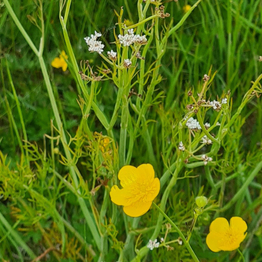
Species-rich neutral grasslands and flood meadows are characterised by their botanical diversity, which in turn supports high invertebrate abundance and the birds that depend on them – particularly ground-nesting waders and seed-eating species. The green-winged orchid (Anacamptis morio) is the flagship of this assemblage, its colonies on ancient, unimproved pastures serving as clear indicators of long-undisturbed, unfertilised swards. Other characteristic plants include pepper-saxifrage, green-winged orchid, adder’s-tongue fern and a range of sedges and fine-leaved grasses that disappear quickly once nutrient levels rise.
Churchyards and road verges – though ecologically marginal – are increasingly recognised as important refugia. Many Suffolk churchyards manage their grass in ways that inadvertently replicate traditional meadow conditions, and some hold plant communities that have been lost from the surrounding agricultural landscape. Road verge networks, if managed on cutting regimes that allow flowering and seeding, can function as linear corridors of flower-rich grassland. The LNRS explicitly identifies these non-agricultural grassland contexts as priority areas, reflecting a recognition that conservation at a landscape scale must make use of every available habitat.
Suffolk’s Meadow and Pasture Habitats
Key
A conservation priority in Suffolk’s Historic Biodiversity Action Plan.
A key habitat for recovery under Suffolk’s Local Nature Recovery Strategy.



Associated habitats
Churches, churchyards and cemeteries: The grasslands of churchyards and cemeteries have, in many cases, escaped the agricultural improvement that transformed surrounding land, preserving populations of wildflowers long lost elsewhere in the local landscape. Ancient churchyards, in particular, can hold rare species, including various orchids, cowslips, and an abundance of lichens growing on old stone. With sympathetic management – delayed or partial cutting – these sites can function as important refuges for declining grassland species in otherwise heavily modified landscapes.
Neutral grassland: Unimproved and semi-improved neutral grasslands on soils of intermediate pH represent one of the most species-rich and most threatened habitats in lowland England. In Suffolk, surviving examples support a diverse sward of grasses and broadleaved herbs, including meadow saxifrage, pepper saxifrage and various vetches, alongside the insects that depend on them. Most examples have been lost to ploughing, reseeding or fertiliser application, making intact fragments of high conservation significance.
Calcareous fens and fen meadows: Where fen meadows develop on or adjacent to calcareous soils, they can support a flora of exceptional richness, merging the characteristic species of both grassland and wetland habitats. Plants such as adder’s-tongue fern, marsh orchids and meadow thistle may occur alongside more typical pasture species where the water table remains high, and nutrient inputs are low. These habitats are among the most difficult to restore once lost, making the protection of surviving examples a high priority.
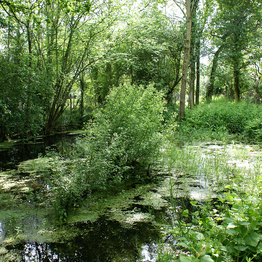
Floodplain habitats: The broader floodplains of Suffolk’s rivers – including seasonally inundated grasslands, scrub, wet woodland and abandoned meanders – represent a mosaic of wetland conditions with significant ecological value. Periodic flooding creates the dynamic conditions that many wetland species require, and floodplain habitats play an important role in water storage, nutrient cycling and sediment management. Restoration of natural floodplain processes is increasingly recognised as a priority both for wildlife and flood risk management.
Road verges with species-rich sward: The roadside verges of Suffolk collectively represent an extensive network of semi-natural grassland, and at their best they support a diversity of wildflowers, grasses and invertebrates comparable to traditional hay meadow. Where verges lie on chalky or sandy soils and have avoided improvement, they can hold populations of cowslip, ox-eye daisy, knapweed, and wild carrot. Cutting management is important – verges cut too early or too frequently lose much of their wildlife value.
Wet grassland and rush pasture: Damp and wet grasslands managed by grazing or cutting provide important feeding and nesting habitat for wetland birds, particularly breeding waders and wintering wildfowl. Rush pastures – dominated by soft rush or sharp-flowered rush and often interspersed with sedges and moisture-loving herbs – form a distinct component of this habitat type and support a specialised invertebrate fauna. These habitats depend on maintained high water levels and careful management to prevent scrub encroachment.
Image: Go to Bed meadow, Bury St Edmunds © Andrew Hill