
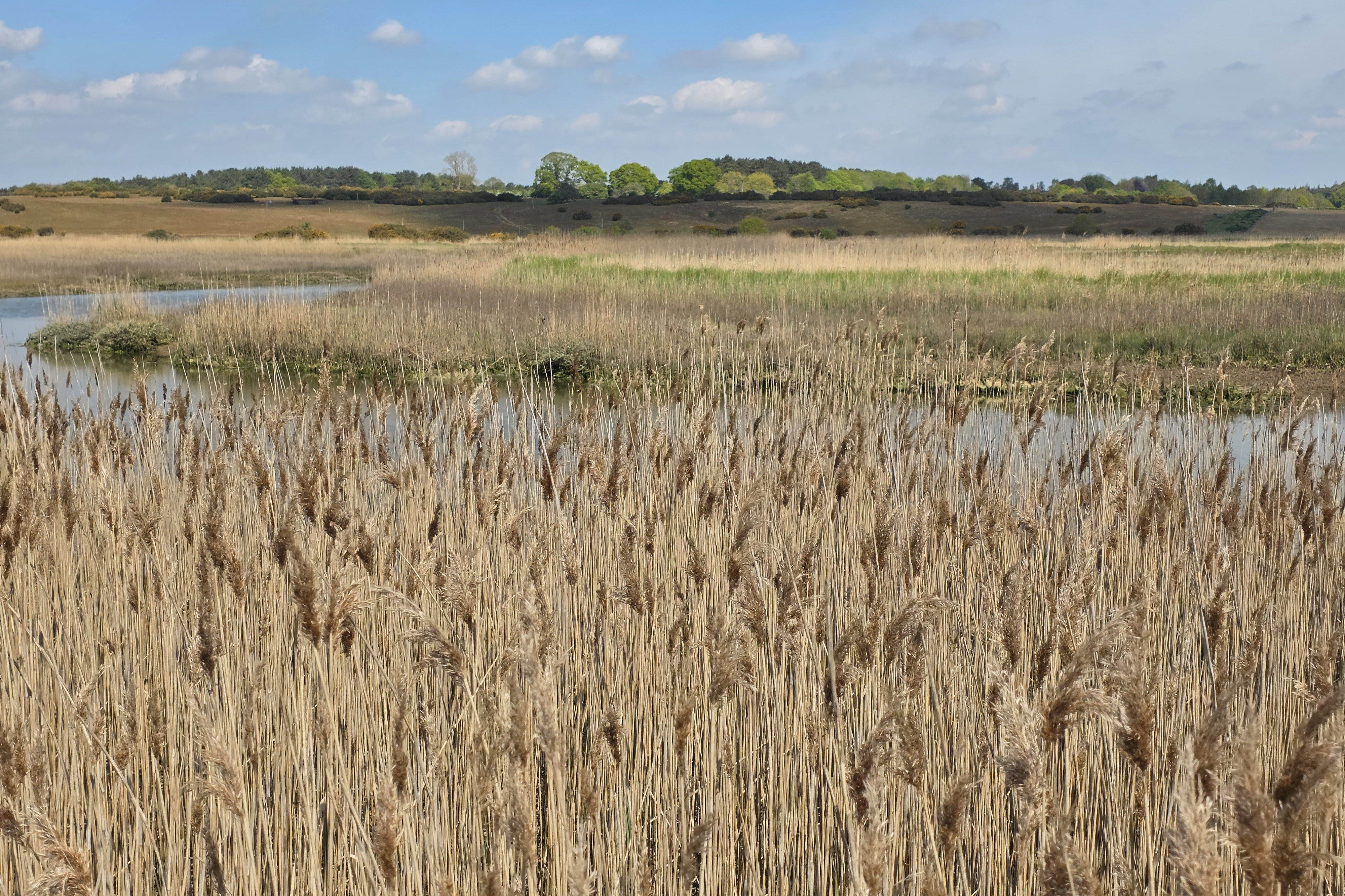
Reedbeds and Freshwater Wetlands
Suffolk holds some of the most extensive and ecologically significant reedbeds in England. The coastal wetland complex between Minsmere and Walberswick, encompassing the RSPB’s Minsmere reserve and the Walberswick National Nature Reserve, represents one of the largest continuous reedbeds in the country and is of international importance for its breeding bird assemblage. It has been central to the recovery of the bittern (Botaurus stellaris) in Britain – a species that had declined to near-extinction as a British breeding bird by the mid-twentieth century, its survival dependent on the creation and restoration of large, structurally diverse reedbeds in which the bird can hunt, establish territories and successfully raise young. The bittern’s extraordinary booming call, produced by males in spring, has become one of the defining sounds of the Suffolk coast.
Reedbeds do not stand alone. They function as part of a broader freshwater wetland system that includes open water, wet grassland, freshwater marshes, drainage ditches, and the complex transitions between them. These habitats collectively support marsh harrier, bearded tit, water rail, barn owl, otter and water vole, as well as nationally important populations of wetland invertebrates and aquatic plants. Wet ditches and drainage channels within grazing marsh are especially significant: a Suffolk ditch in good condition, with clear, nutrient-poor water and diverse marginal vegetation, can support remarkable invertebrate assemblages including water beetles, dragonflies and aquatic plants that have become rare across most of lowland Britain.
The freshwater wetland system is also acutely vulnerable. Water level management, nutrient inputs from the wider catchment, the spread of invasive non-native species – particularly Phragmites die-back associated with salinity intrusion – and the structural simplification of ditch networks all represent active threats. Maintaining Suffolk’s reedbeds and associated wetlands requires active hydrological management at a landscape scale.
Key
Listed as a conservation priority in Suffolk’s Biodiversity Action Plan.
Identified as a key priority for recovery under Suffolk’s Local Nature Recovery Strategy.

Image: Blythburgh Marshes © Emma Aldous