
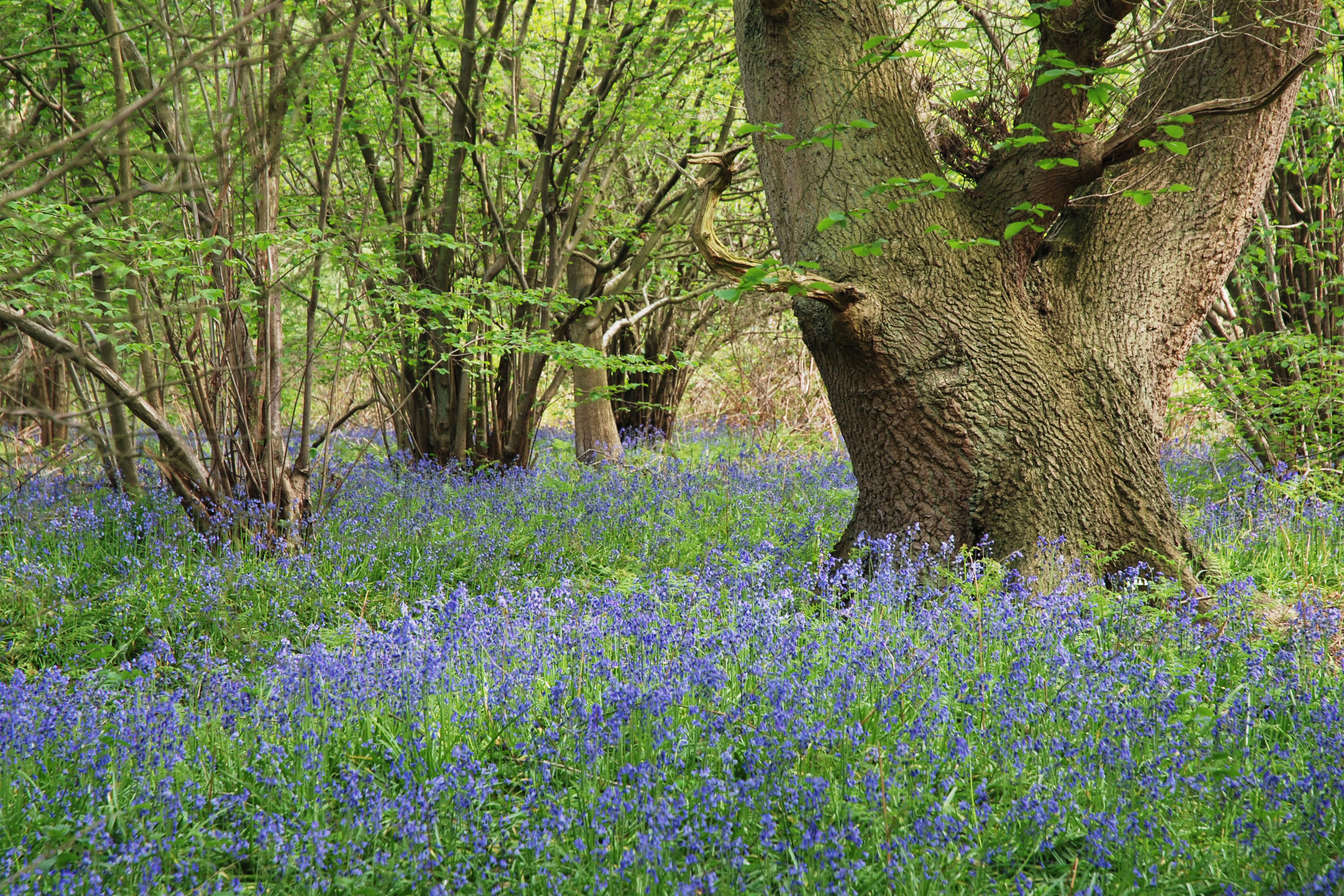
Native Woodland
Suffolk is one of the least wooded counties in England, with woodland covering approximately 9% of its land area, compared with a national average of around 13%, and with ancient woodland – irreplaceable on any human timescale – particularly fragmented. This scarcity makes what exists both precious and under pressure, and places Suffolk’s woodlands among the habitats most in need of effective protection and expansion.
Ancient semi-natural woodlands, shaped by centuries of traditional management including coppicing and pollarding, hold the greatest biodiversity value. Their continuity of tree cover has allowed the development of complex soil communities, epiphytic lichen assemblages, specialist fungal networks and invertebrate faunas that cannot establish in recently planted woodland, however well it is managed. Bradfield Woods in mid-Suffolk, managed as a coppice since at least the thirteenth century, is among the finest ancient woodland examples in lowland England, its rides and compartments supporting over 350 plant species and a rich invertebrate community sustained by the structural diversity of a working coppice. Ancient woodland indicator plants – bluebell, wood anemone, early-purple orchid, herb paris – serve as proxies for this continuity, their presence signalling soil and habitat conditions that took centuries to develop.
The barbastelle bat (Barbastella barbastellus), the assemblage’s flagship species, is one of the most woodland-dependent bats in Britain, roosting under the bark of standing dead and veteran trees and foraging along woodland edges and rides. Suffolk holds some of the most important barbastelle populations in lowland England, associated particularly with ancient woodland complexes in the Waveney valley. The presence of veteran trees – and the continuation of management regimes that produce them – is fundamental to its conservation. Wet woodland, occurring along river valleys and at the margins of fen systems, provides a structurally and floristically distinct component of this assemblage, with its own characteristic specialist communities including several scarce wetland invertebrates.
Suffolk’s ancient woodlands are documented in detail through the Ancient Woodland Inventory, which SBIS updated between 2021 and 2025 to produce the most comprehensive record of the county’s ancient woodland, ancient wood pasture and parkland to date. The inventory maps individual sites across Suffolk and provides the evidence base underpinning planning decisions, habitat management, and conservation targeting. Whether you are researching a specific site, advising on development, or simply exploring Suffolk’s woodland heritage, the Ancient Woodland section of this website provides maps, indicator species guides, habitat feature records, and plant community data drawn directly from the survey work.
Image: © Natural England/Peter Roworth